

Most Singaporeans apply for a renovation loan without first working out how much they actually need — or how much they can realistically borrow. Getting the maths wrong costs you either a rejected application or years of unnecessary interest. The formula is more straightforward than you might expect, but the details matter: your income, your bank’s specific cap, your existing debt obligations, and critically, the total renovation cost you’re committing to before you sign anything.
Quick Answer: How to Calculate Your Renovation Loan in Singapore
> – Your maximum loan amount is 6× your monthly income or S$30,000 — whichever is lower
– Your total monthly debt repayments (including the new loan) must stay below 55% of your gross monthly income (MAS TDSR rule)
– Loan tenure is capped at 5 years across all banks
– You cannot use CPF to repay a renovation loan — it must come from cash or salary
– Stat: The average HDB renovation in Singapore costs S$40,000–S$75,000 in 2026, meaning many homeowners need to supplement a bank loan with personal savings
Getting this calculation right before you approach a bank is the difference between a loan that fits your renovation and a loan that strains your household budget for five years. Worse, if you underestimate your renovation cost and take too small a loan, you’re left chasing expensive top-up financing mid-project. The right number starts with the right contractor quote — and that is where most homeowners lose thousands before they even speak to a bank.
What Is a Renovation Loan in Singapore?
A renovation loan in Singapore is a secured, purpose-specific loan product offered by major banks. Unlike a personal loan — which is disbursed directly to you — a renovation loan is paid directly to your licensed contractor based on submitted invoices or a verified renovation quotation. This disbursement structure is not optional: it is mandated by the Monetary Authority of Singapore (MAS) to ensure funds are used solely for approved renovation works.
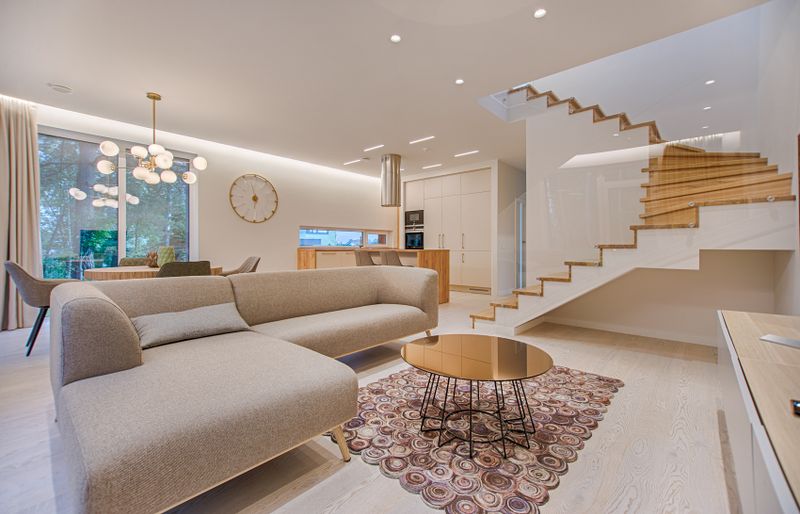
The scope of what qualifies as an approved renovation expense is specific. Banks will fund structural alterations, flooring, tiling, electrical rewiring, plumbing, built-in carpentry, painting, and similar permanent works. They will generally not finance furniture purchases, appliances, or moveable fixtures — these are considered personal expenditure, not renovation, under MAS guidelines.
This distinction matters for your budgeting. If your renovation quote includes a sofa set, a refrigerator, or freestanding wardrobes, those line items will not be covered by your renovation loan. Strip them out before calculating how much to borrow. For more on what qualifies as renovation work in HDB flats, see the HDB renovation guidelines.
How to Calculate Your Renovation Loan: The Formula
The calculation is governed by two hard caps applied simultaneously. Your approved loan amount will be whichever of these figures is lower:
Formula:
“
Maximum Renovation Loan = LOWER OF:
(A) 6 × Gross Monthly Income
(B) S$30,000
`
Worked examples:
| Monthly Income | 6× Calculation | Loan Cap Applied | Maximum You Can Borrow |
|---|---|---|---|
| S$3,000 | S$18,000 | Income limit | S$18,000 |
| S$4,000 | S$24,000 | Income limit | S$24,000 |
| S$5,000 | S$30,000 | Statutory cap | S$30,000 |
| S$6,500 | S$39,000 | Statutory cap | S$30,000 |
Once your monthly income exceeds S$5,000, the statutory S$30,000 ceiling applies regardless. Earning more does not unlock a larger renovation loan — it simply confirms you comfortably meet the cap.
Joint Applications
If you apply jointly with a spouse, sibling, parent, or child, most banks will assess the loan based on the combined income — but still subject to the S$30,000 cap. Some banks compute using the primary applicant's income multiplied by up to 12 times when a co-applicant is present, but the S$30,000 ceiling remains absolute. Joint applications are most useful when the primary applicant's income alone would result in a lower limit (for example, a monthly income of S$3,000 yielding a solo cap of S$18,000).
The TDSR Rule — Your Hidden Constraint
Beyond the income multiplier, the MAS Total Debt Servicing Ratio (TDSR) framework applies. Your total monthly debt obligations — including your mortgage, car loan, credit card minimum payments, and the proposed renovation loan instalment — must not exceed 55% of your gross monthly income.
TDSR Check Formula:
`
(All existing monthly debt payments + new renovation loan monthly instalment)
÷ Gross Monthly Income ≤ 55%
“
If you already have a substantial HDB mortgage and a car loan, your available TDSR headroom may be considerably narrower than the income multiplier formula suggests. It is worth calculating this before applying, as a TDSR breach is one of the most common reasons for renovation loan rejection.
CPF Rules
CPF cannot be used to service a renovation loan. This is absolute — there is no CPF withdrawal scheme for renovation financing. Your monthly renovation loan repayments must come from your cash savings or salary. Factor this into your monthly cash flow planning, particularly if a large portion of your take-home pay already flows into CPF.
Maximum Loan Amounts by Bank (2026)
All major Singapore banks apply the same MAS-mandated formula, but they differ on interest rates, fees, and eligibility criteria. Here is a factual comparison for 2026:
DBS Renovation Loan
DBS is the most widely used renovation loan lender in Singapore. The standard advertised rate is 4.88% p.a. (EIR 5.96% p.a.). Customers with an existing DBS home loan can access a promotional rate of 3.38% p.a. (EIR 4.49% p.a.), currently valid until 30 September 2026. DBS also offers an Eco-Aware Renovation Loan at 4.68% p.a. (EIR 5.75% p.a.) for homeowners incorporating at least six qualifying eco-friendly features. A 2% handling fee and 1% insurance premium apply to standard applications. Maximum loan: S$30,000 or 6× monthly income.
OCBC Renovation Loan
OCBC’s standard renovation loan runs at approximately 4.18% p.a. (monthly rest rate 5.38% p.a., EIR 6.08% p.a.) for a S$30,000 loan over five years. Their Eco-Care Renovation Loan drops to 3.98% p.a. (EIR 5.39% p.a.) for energy-efficient homes assessed through a Tropical Home Energy Efficiency Assessment. Administrative fee: 1% of the loan amount plus a S$200 processing fee. First three cashier’s orders are issued free; subsequent orders incur a S$20 charge.
UOB Renovation Financing
UOB has shifted its renovation financing strategy toward personal loans rather than dedicated renovation loan products. Their personal loan rates start from 1.00% p.a. (EIR from 1.93% p.a.), which — on the surface — appears considerably lower. However, this rate is promotional and tenure-dependent. The key advantage of a UOB personal loan for renovation is the higher potential loan quantum (up to S$200,000), which suits larger-scale projects or homeowners who need to finance furniture and appliances alongside structural works. Disbursement is made directly to you rather than to the contractor, which provides flexibility but removes the MAS-mandated disbursement safeguard.
Maybank Renovation Loan
Maybank’s renovation loan is primarily positioned for existing Maybank home loan customers, who benefit from a promotional rate of 2.50% p.a. in year one, stepping up to 4.08% p.a. thereafter. The Renovation Loan Board Rate (RLBR) stands at 10.85% p.a., making the promotional discount significant. A 2% processing fee applies, with a minimum of S$200. Non-Maybank home loan customers should check current eligibility directly, as product availability can be restricted.
2026 Repayment Comparison: S$30,000 Loan Over 5 Years
To illustrate total cost of borrowing, here is an approximate monthly repayment and total interest comparison across banks at standard rates:
| Bank | Advertised Rate | EIR | Est. Monthly Repayment | Total Interest Paid |
|---|---|---|---|---|
| DBS (home loan promo) | 3.38% p.a. | 4.49% | ~S$549 | ~S$2,940 |
| DBS Standard | 4.88% p.a. | 5.96% | ~S$566 | ~S$3,960 |
| OCBC Standard | 4.18% p.a. | 6.08% | ~S$555 | ~S$3,300 |
| Maybank (yr 1 promo) | 2.50%→4.08% | Varies | ~S$545–S$560 | ~S$3,400 |
Figures are indicative. Confirm exact terms with your bank before committing.
The interest differences between banks are not dramatic in absolute dollar terms at S$30,000 — but the total renovation cost you borrow against has a far greater impact on your total interest paid. Borrowing S$20,000 instead of S$30,000 saves roughly S$1,300–S$2,600 in interest over five years, regardless of which bank you choose.
Step-by-Step: How to Apply for a Renovation Loan in Singapore
Step 1: Get your renovation quotation first. Banks require a formal quotation from a licensed contractor before they will process your application. This quotation defines the loan amount you apply for. Do not approach a bank with a ballpark figure.
Step 2: Verify contractor licensing. Your contractor must hold a valid licence from the Building and Construction Authority (BCA). Unlicensed contractors disqualify your loan application.
Step 3: Calculate your maximum eligible amount. Apply the formula: 6× monthly income or S$30,000, whichever is lower. Then run your TDSR check to confirm you have sufficient headroom.
Step 4: Prepare your documents. Standard requirements include your NRIC, latest three months’ CPF contribution statements or payslips, proof of property ownership (HDB or private title), the signed renovation quotation, and your SingPass login for MyInfo-enabled applications.
Step 5: Submit your application. Most major banks offer online applications. DBS and POSB applications can be submitted via MyInfo for faster processing. Approval typically takes one to three business days; some banks offer same-day in-principle approval.
Step 6: Loan disbursement to contractor. Once approved, the bank issues cashier’s orders or bank transfers directly to your contractor — not to you. Ensure your contractor’s bank details and registered name match what was submitted.
Step 7: Renovation begins. Your repayment schedule starts from disbursement date. Build this into your monthly budget from day one.
How to Budget Your Renovation Properly Before Taking a Loan
The single most effective way to reduce your loan amount — and therefore your total interest cost — is to arrive at an accurate renovation budget before you speak to any bank. Overestimating leads to borrowing more than you need. Underestimating leads to cash shortfalls mid-project, which can stall your renovation entirely.
A structured approach starts with separating your renovation wishlist into three categories: essential structural works (must be done), practical upgrades (high value-to-cost ratio), and cosmetic preferences (nice to have, can be deferred). Loan only what falls into the first two categories. Defer the rest.
Independently verify your quotation. If you have received only one quote, you cannot know whether it is market-priced. Getting two to three itemised quotations from different contractors gives you price anchors. Be specific: ask for line-item breakdowns by trade (carpentry, tiling, electrical, painting) rather than lump-sum quotes. Lump sums obscure where the margin sits.
Include a contingency buffer of 10–15% in your total budget for unforeseen structural issues, particularly in older HDB flats where concealed wiring or plumbing may need replacing once walls are opened. Do not borrow the contingency amount upfront — hold it in savings and only draw on it if needed.
Finally, reconcile your loan repayment against your monthly cash flow. A S$30,000 loan over five years at DBS standard rates costs approximately S$566 per month. If that represents more than 15–20% of your take-home pay on top of existing obligations, you are stretching your budget too thin for a comfortable five-year repayment period.
Why Choosing Hock Star Keeps Your Renovation Loan Smaller
There is a structural reason why Singaporean homeowners who engage interior design (ID) firms routinely end up borrowing more than those who engage direct contractors: the ID model layers design fees, project management markups, and subcontractor margins into every line item. That overhead does not add square footage or better materials — it adds cost to the same physical work.
Hock Star operates as a direct renovation contractor. There is no ID intermediary, no subcontracting chain, and no design fee embedded in the carpentry quote. Hock Star employs its own in-house tradespeople across carpentry, tiling, electrical, and painting — meaning the price you see in your quotation is the actual cost of the work, without margin layers stacked on top.
The practical implication for your renovation loan calculation is significant. Direct contractor pricing typically runs 20–30% lower than equivalent ID firm pricing for the same scope of work. On a S$50,000 equivalent renovation scope, that translates to S$10,000–S$15,000 in savings — which directly reduces the amount you need to borrow. A smaller loan means a lower monthly repayment, a shorter potential tenure, and materially less interest paid over the life of the loan.
Hock Star provides fully itemised, transparent quotations — which is exactly what your bank requires to process a renovation loan application. Every line item is broken out by trade and material specification, giving you full visibility before you commit, and giving your bank a clean document for disbursement processing. There are no hidden variations, no post-contract price increases for work that was always within scope.
If your renovation budget is currently sitting at S$30,000 based on an ID firm’s preliminary estimate, a Hock Star direct quote for the same scope may well bring that number under S$25,000 — which changes your loan calculation, your repayment schedule, and your total interest cost in ways that compound meaningfully over five years.
Conclusion: Borrow Only What You Actually Need
The most important number in your renovation loan calculation is not the bank’s maximum — it is the accurate total cost of your renovation from a contractor who prices without markup layers. Get that number right first, and the loan calculation follows directly.
The formula is straightforward: 6× monthly income or S$30,000, whichever is lower. Your TDSR must stay under 55%. Your tenure cannot exceed five years. CPF cannot be used. Disbursement goes directly to your contractor.
But before you apply to any bank, confirm your renovation cost with a direct contractor quote from Hock Star. A lower total renovation cost means a smaller loan, a lower monthly repayment, and thousands of dollars less in interest over the life of your borrowing. That is not a marginal saving — on a five-year loan, it is the difference between a renovation that fits your life and one that quietly strains it.
Request your transparent, itemised quotation from Hock Star at hockstar.sg. Know your real renovation cost before you step into any bank.
For official guidance, refer to Monetary Authority of Singapore.
For official guidance, refer to CPF Board housing information.
For official guidance, refer to HDB official renovation guidelines.
Frequently Asked Questions
How exactly do I calculate the maximum renovation loan I can get in Singapore if I earn S$4,500 per month?
At S$4,500 per month, your maximum renovation loan is 6 × S$4,500 = S$27,000, since this falls below the statutory S$30,000 cap. However, this is the gross eligibility ceiling — your actual approved amount may be lower if your existing debt obligations bring you close to the MAS TDSR limit of 55% of gross monthly income. Always run your TDSR check before applying.
Can I use my CPF Ordinary Account to pay off or top up my renovation loan in Singapore?
No. CPF savings cannot be used to service, repay, or top up a renovation loan in Singapore. The CPF Board explicitly excludes renovation, improvement, and repair works from permitted CPF withdrawal uses. All renovation loan repayments must be funded from cash — either your salary or existing savings.
What happens if my renovation costs more than the S$30,000 renovation loan cap in Singapore?
If your renovation cost exceeds S$30,000, you have three main options: supplement the bank renovation loan with personal savings, apply for an unsecured personal loan for the excess amount (subject to separate approval and likely at a different interest rate), or reduce the scope of renovation works to fit within what you can finance. Renovating in phases — completing structural and essential works first, then cosmetic upgrades later — is a practical approach many Singapore homeowners take.
Is it better to take a renovation loan or a personal loan for a Singapore HDB flat renovation in 2026?
For HDB renovations within the S$30,000 cap, a dedicated renovation loan typically offers lower interest rates than a personal loan from the same bank. The main trade-off is disbursement structure: renovation loans pay your contractor directly (required by MAS), while personal loans are paid to you with no restrictions on use. If your renovation budget comfortably fits within S$30,000 and you want the lowest interest cost, a dedicated renovation loan from DBS, OCBC, or Maybank will usually be cheaper than a personal loan.
How long does it take for a renovation loan to be approved and disbursed by banks in Singapore?
Most major banks in Singapore process renovation loan applications within one to three business days once all documentation is submitted, including a valid quotation from your licensed contractor. DBS and POSB applications submitted via MyInfo can receive same-day in-principle approval. Disbursement (by cashier’s order or bank transfer to your contractor) typically follows within two to five business days of final approval. Ensure your contractor is ready to begin works before submitting your application to avoid delays between disbursement and project commencement.