

Laminate flooring has quietly become one of the most practical flooring choices for Singapore homeowners — and for good reason. It gives you the warmth and character of timber at a fraction of the cost, holds up well in everyday HDB life, and comes in a range of finishes that rival far more expensive alternatives. If you are weighing up your flooring options for a new flat, a renovation, or a refresh, this guide covers everything you need to make a confident decision in 2026.
Quick Answer: Laminate Flooring Singapore
- Laminate flooring costs between S$2.50 and S$15 per square foot in Singapore, depending on thickness, brand, and installation complexity
- It suits most HDB flats and condominiums — avoid moisture-prone areas like wet kitchens and bathrooms
- Laminate sits between vinyl and parquet in cost, durability, and aesthetic — the versatile “middle option” for most renovations
- AC rating (Abrasion Class) is the single most important spec — look for AC3 or AC4 for residential use
- A typical 800–1,000 sqft HDB flooring project takes 2–4 days to complete
- Laminate is one of the most popular flooring choices for Singapore HDB flats
Choosing the wrong flooring for a Singapore home is an expensive mistake. Humidity, heavy foot traffic, and BCA regulations all narrow your options in ways that are not immediately obvious when you are browsing showroom samples. Laminate offers a compelling balance — but only if you understand what you are actually buying and how it performs in Singapore’s specific climate. The real question is not whether laminate is good; it is whether it is right for your specific home, lifestyle, and renovation budget.
What Is Laminate Flooring and How Is It Made?
Laminate flooring is a multi-layer synthetic product engineered to mimic the look of natural timber. Understanding its construction helps explain why it behaves the way it does — and why it is neither simply “cheap parquet” nor “rigid vinyl.”
A standard laminate board comprises four distinct layers bonded together under high heat and pressure. The bottom layer is a stabilising backing that resists moisture from below and prevents the board from warping. Above that sits a dense HDF (High Density Fibreboard) core — the structural backbone — whose thickness (typically 6mm to 12mm) determines how solid the floor feels underfoot. The third layer is a photographic film that reproduces the wood grain or stone texture you actually see; modern digital printing has made this layer remarkably convincing. Finally, a clear melamine wear layer sits on top, protecting the surface from scratches, stains, and daily abrasion.
How does laminate differ from vinyl flooring in Singapore?
Vinyl flooring — whether LVT (Luxury Vinyl Tile) or SPC (Stone Plastic Composite) — is made from PVC and is fully waterproof. Laminate, by contrast, has a real wood-based HDF core that can swell if water penetrates the joints for extended periods. Vinyl is also softer underfoot and more forgiving on uneven subfloors. Laminate generally offers a more authentic timber feel and crisper surface texture, but requires more care around moisture exposure. For wet areas or homes with young children prone to spills, vinyl is the safer choice. You can explore vinyl flooring options at Hock Star if waterproofing is your primary concern.
How does laminate differ from parquet flooring?
Parquet is real wood — either solid timber strips or engineered timber with a genuine hardwood veneer. It can be sanded and refinished multiple times, develops a natural patina over decades, and carries a tactile warmth that laminate can approximate but not fully replicate. The trade-off is significant cost, greater sensitivity to Singapore’s humidity, and the need for professional maintenance. Laminate offers roughly 80% of the aesthetic at 40–60% of the price with less maintenance overhead. For natural timber depth and character, read about parquet flooring options in Singapore. For the timber look with less complexity and lower cost, laminate is likely your answer.
Laminate Flooring Cost in Singapore (2026)
Pricing for laminate flooring in Singapore varies considerably based on board thickness, AC rating, brand, and the scope of installation work involved. The per-sqft figures below generally cover supply and installation. Always confirm with your contractor whether hacking of existing flooring, floor levelling, and disposal fees are included — these can add S$1.00–S$3.00 psf to your total project cost.
Budget range: S$2.50–S$4.50 per square foot
Entry-level laminate in this range typically runs 6–8mm thick with an AC2 or AC3 rating. Surface finishes are simpler, plank widths narrower, and embossing less defined. These are workable options for rental units, utility rooms, or homeowners on a tight renovation budget — but they are not what we would recommend for a main living area you intend to keep for a decade or more.
Mid-range: S$4.50–S$8.00 per square foot
This is where the majority of Singapore HDB and condo renovation projects land, and for good reason. At this price, you are getting 8–10mm thick boards with AC3–AC4 ratings, wider planks, more realistic embossed textures, and better acoustic underlays. Most mid-range laminates carry meaningful moisture-resistance features. The aesthetic variety is significantly broader — wood tones, grey washes, herringbone-compatible options — making it easier to coordinate with your overall interior design scheme.
Premium range: S$8.00–S$15.00 per square foot
Premium laminate products — including European-engineered boards from established brands — fall into this bracket. You are looking at 10–12mm thickness, AC4–AC5 ratings, enhanced acoustic performance, micro-bevelled edges for a more authentic plank appearance, and surface technologies that closely replicate real timber grain texture. At this price, laminate begins to compete directly with mid-range engineered parquet on aesthetics, while retaining its moisture and maintenance advantages.
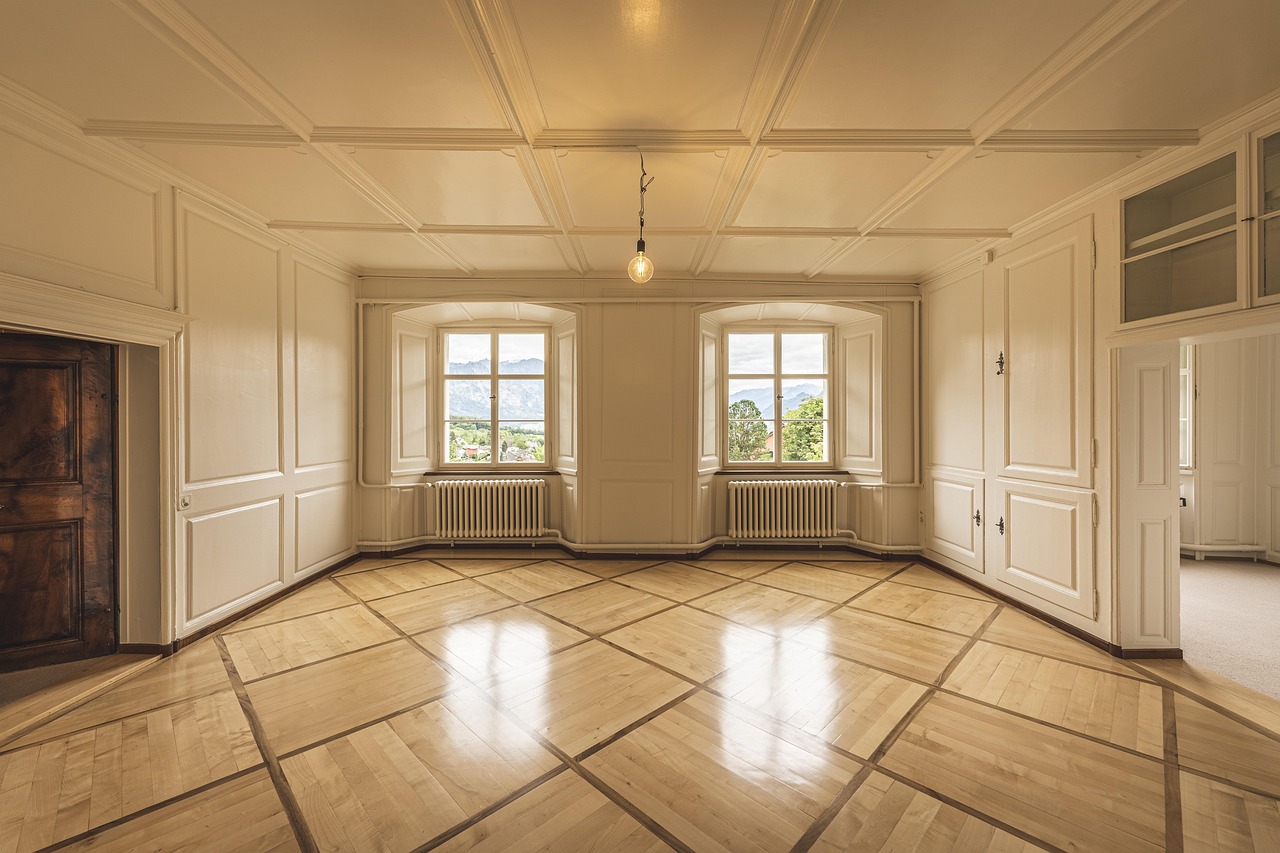
Laminate vs Vinyl vs Parquet — Which Is Right for a Singapore Home?
Many Singapore homeowners struggle to understand how laminate compares to vinyl and parquet for a Singapore HDB renovation, and which one holds up better in our climate. The honest answer is that each material occupies a different position in the value-and-performance spectrum, and the right choice depends on your specific priorities.
Vinyl is the most moisture-resistant of the three and increasingly popular for Singapore homes with young children, elderly residents, or wet-area adjacency. SPC vinyl is dimensionally stable even in high humidity and requires minimal maintenance. Laminate occupies the middle ground — it looks and feels closer to real timber than vinyl, offers excellent scratch resistance, and is available across a wide price range. Its vulnerability to sustained moisture exposure is the primary limitation in Singapore’s humid context. Parquet is the premium choice for homeowners who want genuine timber character and are willing to invest accordingly.
In the laminate market specifically, European brands such as Pergo (Swedish, one of the original laminate innovators) and Quick-Step (Belgian, known for surface realism and moisture protection) represent the premium tier. Local and regional distributors supply mid-range laminates at competitive price points under various house brands. The brand name matters less than the AC rating, board thickness, and quality of installation — a mid-range laminate installed correctly will outperform a premium laminate installed poorly.
Individual results and pricing may vary. Always obtain multiple quotations from licensed renovation contractors before committing.
Is Laminate Flooring Suitable for HDB Flats in Singapore?
HDB permits laminate flooring installations provided they comply with HDB’s renovation guidelines — specifically that works are carried out by a licensed contractor and that structural integrity is not compromised. Hacking of existing floor tiles may require HDB’s approval process for certain unit types, so it is worth confirming with your contractor before committing to a full hacking approach.
Singapore’s year-round humidity — typically 70–90% — is the legitimate concern with laminate. The key mitigation is proper installation: sealed joints, quality underlays, and expansion gaps at walls and transitions. A professional installation with correct gap allowances will handle Singapore’s humidity without issue. What causes problems is water sitting on the surface for extended periods, or moisture entering from below through a poorly prepared subfloor. Laminate should not be installed in wet kitchens, bathrooms, or on balconies exposed to rain. For flooring works in HDB flats, refer to the guidelines published by the Housing & Development Board.
For noise transmission in HDB flats — particularly relevant if you are on an upper floor — a quality acoustic underlay rated at 17dB impact noise reduction or better is essential. This is both a liveability consideration and a courtesy to neighbours below, and is a BCA requirement for hard flooring materials above common areas.
What to Look For When Buying Laminate Flooring in Singapore
Beyond the AC rating, pay close attention to board thickness (8mm is the practical minimum; 10–12mm is noticeably better underfoot), surface finish and embossing (look for “embossed in register” or EIR technology for the most convincing timber appearance), moisture protection features (some laminates carry certifications for splash or spill resistance — not full waterproofing, but meaningful in a Singapore household), underlay quality (do not cut corners — it directly affects acoustic performance and long-term board stability), and warranty terms (reputable products carry 10–25 year structural warranties, with conditions around professional installation and proper maintenance).
When shopping for laminate flooring in Singapore, homeowners often compare options from Hafary, Floors & Walls, and IKEA. Retail flooring suppliers offer a wide selection but typically charge separately for installation. Hock Star supplies and installs laminate flooring directly — one quote, one team, no hidden costs. Individual results and pricing may vary. Always obtain multiple quotations from licensed contractors before committing.
Why Choose Hock Star for Laminate Flooring
Hock Star is a HDB-licensed direct renovation contractor, handling laminate flooring supply and installation for HDB flats, condominiums, and landed properties across Singapore. As a direct contractor — not a middleman — Hock Star controls the full installation process, which means competitive pricing, accountable workmanship, and a single point of contact from quotation to handover.
- HDB-registered renovation contractor: Every laminate flooring job meets HDB’s official renovation guidelines and acoustic requirements.
- Direct contractor — no middleman markup: No interior designer commissions, no subcontracting layers. That can bring the cost down compared with an ID-coordinated job.
- 4.4★ Google rating: Based on 17 Google reviews, with 500+ clients served.
- Transparent quoting: Detailed quotes — hacking, disposal, underlay, and installation all itemised clearly.
- Full-service under one roof: Laminate flooring as part of a broader renovation — carpentry, tiling, painting, electrical — all coordinated by Hock Star’s in-house team.
- Free on-site consultation and quotation: No obligation. Hock Star visits your home, assesses the subfloor condition, and provides a detailed quote at no cost.
- Serves HDB, BTO, condo, and landed properties throughout Singapore.
Individual results and pricing may vary. Always obtain multiple quotations from licensed renovation contractors before committing.
Conclusion: Is Laminate Flooring the Right Choice for Your Singapore Home?
For most Singapore homeowners, laminate flooring sits in a comfortable sweet spot: more affordable than parquet, more aesthetically authentic than budget vinyl, and sufficiently durable for the demands of everyday HDB or condo living. It makes practical sense for living rooms, bedrooms, dining areas, and dry kitchens — without demanding the maintenance overhead of real timber or the premium budget of engineered parquet.
The variables that matter most are thickness, AC rating, and installation quality. Get those three right, with a contractor who understands Singapore’s humidity context and HDB requirements, and a well-chosen laminate floor will serve you reliably for a decade or more. If you are ready for a clear, honest quote for your laminate flooring project, contact Hock Star at hockstar.sg.
Frequently Asked Questions
How much does laminate flooring cost in Singapore for a 1,000 sqft HDB flat in 2026?
For a 1,000 sqft HDB flat, a realistic all-in budget for laminate flooring in 2026 runs from approximately S$3,500–S$5,000 for mid-range supply and installation assuming no hacking of existing tiles. If hacking is required, add S$1,000–S$3,000 depending on the existing floor condition and thickness. Premium laminate with full hacking and preparation can reach S$10,000–S$15,000 for the same area. Always get an itemised quote that separates material costs, hacking, disposal, underlay, and installation.
What is the difference between laminate flooring and vinyl plank flooring for a Singapore HDB?
Vinyl plank (particularly SPC) is generally the better choice for homes with young children or pets in Singapore, primarily because it is fully waterproof and forgiving of spills and accidents. Laminate has a wood-based core that can swell with sustained water exposure. Both offer good scratch resistance. If moisture risk is low and you prefer a more timber-like feel underfoot, mid-range laminate with an AC4 rating is a sound choice for living areas and bedrooms.
Can laminate flooring be installed directly over existing tiles in a Singapore HDB flat without hacking the floor?
Yes, laminate can be installed over existing tiles using a float-and-install method, provided the existing tiles are level, intact, and not hollow. This avoids hacking costs and reduces installation time. The trade-off is a slightly raised floor height of typically 10–15mm, which can affect door clearances and transitions to adjacent rooms. Your contractor should assess the subfloor condition before recommending either approach.
How long does laminate flooring typically last in Singapore’s humid tropical climate before needing replacement?
Quality laminate installed correctly typically lasts 10–20 years in Singapore conditions. Day-to-day maintenance is minimal: sweep or vacuum regularly to remove grit that causes surface micro-scratches, wipe spills immediately with a dry or slightly damp cloth, and avoid wet mopping or steam cleaning, which can force moisture into joints. Using felt pads under furniture and door mats at entrances significantly extends the surface life of your laminate floor.
What AC rating or wear class should I look for when buying laminate flooring for a Singapore HDB flat?
For residential use in Singapore, AC3 is the minimum recommended rating; AC4 is preferable for high-traffic households or homes with pets. AC5 and above are rated for commercial environments and are generally unnecessary for domestic settings. Beyond AC rating, prioritise board thickness — 8mm is the practical minimum underfoot, and 10mm or above is noticeably better in terms of feel and durability over time.