

Parquet Flooring Singapore: The Complete Guide to Costs, Types & Installation (2025–2026)

Parquet flooring has experienced a significant resurgence in Singapore renovation projects over the past three years. After a decade in which vinyl plank and large-format porcelain tiles dominated the market, parquet — and particularly the herringbone layout that has become synonymous with contemporary high-end interiors — has returned as the premium flooring specification of choice for Singapore homeowners who want warmth, character, and longevity underfoot. Understanding the full spectrum of what parquet means in Singapore in 2026 — the types, costs, and performance implications in a climate with 82 per cent average humidity — is essential before you commit to a specification. Parquet Flooring Singapore: Parquet Flooring Singapore in Singapore — this guide covers everything you need to know for a successful outcome. Understanding parquet flooring singapore helps avoid costly mistakes HDB and BCA regulations apply — always verify compliance Using a licensed contractor (Hock Star) ensures quality and accountability Quick Answer: Parquet Flooring Singapore 2026 Solid parquet flooring: $10 – $25 per sqft supply and installation Engineered parquet flooring: $8 – $20 per sqft supply and installation Herringbone layout premium: 15–25% over straight-lay installation cost Singapore humidity concern: Engineered parquet is significantly more stable than solid parquet in Singapore’s 82% average humidity HDB rule: Flooring must achieve minimum Impact Isolation Class (IIC) 50 and Sound Transmission Class (STC) 50 for upper-floor units The choice between solid and engineered parquet is not simply about budget — it is about understanding how timber behaves in Singapore’s climate, and which product will still look as it should after five, ten, and fifteen years of humidity cycling. This guide covers everything: types and costs, the herringbone trend, how parquet compares to vinyl and laminate alternatives, and the HDB rules that govern flooring installations in the country’s most common housing typology. Solid vs Engineered Parquet: The Critical Distinction for Singapore Solid Parquet Flooring Solid parquet consists of individual timber fingers or strips manufactured entirely from a single species of timber — typically Merbau, Chengal, American Walnut, White Oak, or Teak — cut to a consistent profile and dimension. The defining characteristic of solid timber is that it moves: timber is hygroscopic, meaning it absorbs and releases moisture in response to changes in ambient humidity. In Singapore’s climate, where relative humidity fluctuates between 65 and 95 per cent and air-conditioning creates a 10 to 15 degree temperature differential indoors, solid parquet undergoes significant dimensional cycling. This movement is not necessarily a defect — well-installed solid parquet with appropriate expansion gaps manages the movement without distress. However, solid parquet does require more careful site preparation, longer acclimatisation before installation (typically 5 to 7 days in the installation environment), and more attentive maintenance (oiling or re-lacquering every 3 to 5 years) than engineered alternatives. Supply and installation cost for solid parquet in Singapore runs $10 to $25 per square foot depending on species, strip dimension, and layout. Engineered Parquet Flooring Engineered parquet consists of a genuine timber veneer surface (typically 2 to 6mm thick) bonded to a multi-ply or HDF core. The cross-grain construction of the core dramatically reduces the board’s susceptibility to humidity-driven expansion and contraction — the individual plies are oriented in opposing directions, counteracting each other’s movement. The result is a flooring product that looks and feels like solid timber at the surface while behaving with near-dimensional stability in Singapore’s conditions. For Singapore homeowners, engineered parquet is the technically superior choice in most residential applications. The timber veneer surface — available in the full range of species and finishes available in solid timber — delivers the same aesthetic warmth and visual quality as solid, and the engineered core handles Singapore’s humidity cycling without the maintenance demands or movement risks of solid timber. Supply and installation cost for engineered parquet runs $8 to $20 per square foot depending on veneer thickness, species, and layout. The herringbone pattern commands a 15 to 25 per cent installation premium due to the additional cutting precision and material wastage involved. Parquet vs Vinyl Plank vs Laminate: The Singapore Comparison Parquet vs SPC/LVT Vinyl Plank Stone Polymer Composite (SPC) and Luxury Vinyl Tile (LVT) plank flooring have dominated the Singapore mass-market residential flooring segment for the past five years. Their appeal is understandable: they are fully waterproof (genuine parquet and engineered parquet are not), dimensionally stable in humidity, and available in convincing timber-effect prints at a cost of $5 to $12 per square foot — substantially below engineered parquet. For homeowners with young children, pets, or bathrooms and kitchen areas requiring flooring continuity, SPC/LVT is a compelling practical choice. The distinction that matters is at the surface level. SPC and LVT use a photographic timber-effect print layer — regardless of how high the resolution, at close range or under certain lighting conditions, the surface reads as manufactured rather than natural. Engineered parquet has a genuine timber veneer surface: the grain variation, the subtle texture, the tactile quality underfoot, and the way it responds to light are characteristics that vinyl cannot replicate. For a premium renovation where the sensory quality of the finish matters, engineered parquet is the appropriate specification. For a practical, durable, cost-effective solution, SPC/LVT delivers excellent value. Parquet vs Laminate Flooring Laminate flooring uses a high-resolution photographic print under a wear layer on an HDF core. Like SPC/LVT, it provides a timber-effect appearance at lower cost than genuine timber. Unlike SPC/LVT, standard laminate is not waterproof — the HDF core swells when exposed to standing water or prolonged moisture. For Singapore applications in living and bedroom areas with no direct water exposure, moisture-resistant laminate is serviceable but lacks the premium surface quality of engineered parquet. Supply and installation cost for mid-range moisture-resistant laminate runs $4 to $8 per square foot — roughly half the cost of comparable engineered parquet. The Herringbone Trend: Why It Works in Singapore Homes Herringbone layout — where parquet fingers or planks are set at 45-degree angles to each other in a V-shaped pattern — has become the definitive premium flooring aesthetic in
The Hidden Danger of Formaldehyde

Written by: Hock Star Direct Contractor Team (20+ Years HDB & BTO Experience) Last Updated: April 2026 Formaldehyde Danger Home Singapore: Formaldehyde Danger Home Singapore in Singapore — this guide covers everything you need to know for a successful outcome. Understanding formaldehyde danger home singapore helps avoid costly mistakes HDB and BCA regulations apply — always verify compliance Using a licensed contractor (Hock Star) ensures quality and accountability According to industry data, Singapore homeowners spend an average of $50,000–$80,000 on a 4-room HDB renovation, with timelines typically ranging from 6 to 12 weeks depending on scope — making contractor selection one of the most important decisions in the process. Formaldehyde is a toxic, colorless gas commonly emitted by cheap carpentry glues, paints, and laminate adhesives used in home renovations. It causes severe eye irritation, asthma flare-ups, and is classified as a human carcinogen. In Singapore’s humid climate, formaldehyde can actively “off-gas” into your HDB or condo for up to 2 years if untreated. Why is Formaldehyde a Problem in Singapore? That sharp, chemical “new house smell” after a renovation finishes isn’t a sign of cleanliness—it is the smell of Volatile Organic Compounds (VOCs), primarily formaldehyde. Key Considerations for Formaldehyde Danger Home Singapore in Singapore In the carpentry industry, urea-formaldehyde is heavily used because it is an incredibly cheap and effective adhesive. The danger is magnified in Singapore because heat and humidity accelerate formaldehyde off-gassing. How to Remove Formaldehyde After a Renovation If your renovation is already completed, you must take active steps to purge the toxins from your living space before moving in. The “Bake and Air” Method: Open all cabinet doors, drawers, and windows. Place industrial fans pointing outwards to aggressively flush the gas out for at least 2 weeks. Anti-Formaldehyde Coatings: You can hire specialized VOC-removal companies to spray a photo-catalyst coating over your carpentry. Air Purifiers with Heavy Carbon Filters: Standard HEPA filters do not trap formaldehyde. You must use an air purifier equipped with a thick, activated carbon filter. Frequently Asked Questions (FAQ) Do indoor plants remove formaldehyde? While plants like the Spider Plant absorb trace amounts of VOCs, you would need hundreds of plants to effectively combat the off-gassing of a newly renovated BTO. How long does formaldehyde stay in a new house? Without active ventilation or treatment, standard E2/E1 carpentry can continue to off-gas harmful levels of formaldehyde for 1 to 2 years. Key Considerations for Formaldehyde Danger Home Singapore in Singapore What Should Homeowners Know Before Proceeding? Singapore homeowners planning formaldehyde danger home singapore work should factor in HDB regulations, contractor licensing requirements, and realistic timelines. The HDB renovation portal outlines approved works, materials, and contractor requirements that apply to most residential projects. Working with a licensed direct contractor like Hock Star removes the interior designer markup and gives homeowners direct accountability, which can lower the overall cost compared with an ID-coordinated project. How Long Does It Typically Take? Most formaldehyde danger home singapore projects in Singapore take 4-12 weeks depending on scope, permit requirements, and material lead times. HDB projects requiring permits add 2-4 weeks for approval. Engaging a contractor early in the planning phase ensures materials are ordered and permits processed before work begins, minimising overall timeline. Practical Guidance for Singapore Homeowners What Should You Verify Before Hiring a Contractor? Before engaging any renovation contractor in Singapore, verify three things: their BCA licence number (check on the BCA contractors registry), their HDB registration status if your project involves an HDB flat, and their insurance coverage. A licensed direct contractor like Hock Star handles all compliance requirements and provides clear documentation from quote to completion. Renovation costs in Singapore vary significantly based on scope, materials, and timeline. Getting 2-3 comparable quotes helps establish a fair market rate — but the lowest quote is rarely the best value if it cuts corners on materials or licensed tradespeople. How Long Will Your Project Take? Most Singapore renovation projects take 6-12 weeks from contract signing to handover. HDB projects requiring permits add 2-4 weeks for approval. Condo projects involving MCST approval add another 2-3 weeks. Planning your temporary accommodation and storage needs in advance prevents unnecessary stress during the renovation period. Conclusion Preventing formaldehyde exposure begins with selecting the right contractor. By insisting on low-VOC adhesives, high-quality E0 plywood, and anti-bacterial paints, you can ensure your newly renovated HDB or condo is a safe sanctuary from day one. Do not let cheap materials compromise your family’s long-term respiratory health. Disclaimer: The information provided in this article is for general health awareness and informational purposes. It does not constitute medical advice. If you experience severe allergic reactions or respiratory distress after a home renovation, please seek immediate medical attention. Always ensure your contractor provides certified low-VOC materials. For official HDB renovation guidelines and approved contractor requirements, visit the HDB renovation portal. Contractor licensing is governed by the Building and Construction Authority (BCA). 🏆 Featured in SingaReviews — Best Renovation Contractors in Singapore 2026Hock Star Direct Contractor has over 20 years of experience and is rated 4.4★ from 17 Google reviews. Related Articles Carpet Flooring Singapore: Types, Costs & Installation Guide (2026) HDB Optional Component Scheme (OCS): Complete Guide for Singapore Homeowners (2026) LED Strip Lights Singapore: Ambience, Types & Installation Guide (2026)
Why Low Formaldehyde Plywood is Essential
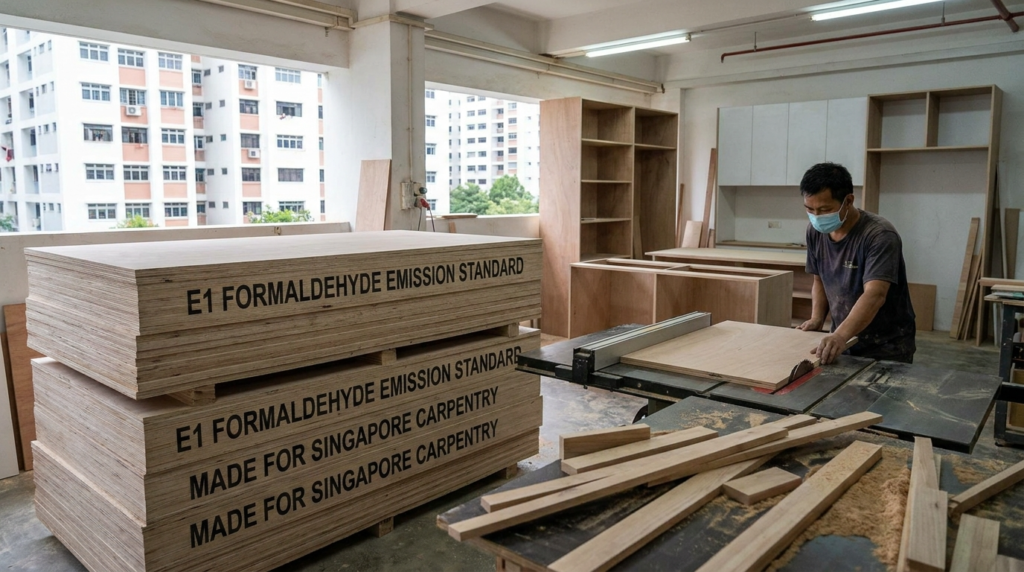
Written by: Hock Star Direct Contractor Team (20+ Years HDB & BTO Experience) Last Updated: April 2026 Low Formaldehyde Plywood Singapore: Low Formaldehyde Plywood Singapore in Singapore — this guide covers everything you need to know for a successful outcome. Understanding low formaldehyde plywood singapore helps avoid costly mistakes HDB and BCA regulations apply — always verify compliance Using a licensed contractor (Hock Star) ensures quality and accountability Low formaldehyde plywood (specifically rated E0 or Super E0) is the safest material for custom built-in carpentry in Singapore. While it costs roughly 15-20% more than standard E2 plywood, it drastically reduces the emission of toxic, cancer-causing VOCs (Volatile Organic Compounds) in your home, protecting your family from respiratory issues. The Danger of Cheap Carpentry in HDBs Custom carpentry—like kitchen cabinets, built-in wardrobes, and feature walls—makes up the bulk of any BTO or resale renovation. To keep prices artificially low, many contractors and IDs use cheap, industrial-grade plywood (E2 grade) bonded with urea-formaldehyde resin. Key Considerations for Low Formaldehyde Plywood Singapore in Singapore In Singapore’s high heat and high humidity, this cheap plywood undergoes rapid “off-gassing.” This is what causes that sharp, pungent “new house smell” that burns your eyes and throat. Benefits of Low Formaldehyde Plywood Immediate Move-In Safety: Standard carpentry requires you to “bake” the house to clear the toxic gas. Low formaldehyde plywood allows for a safer, faster move-in. Allergy and Asthma Prevention: Formaldehyde is a known irritant that triggers asthma attacks, eczema, and severe respiratory distress. E0 wood virtually eliminates this risk. Long-Term Structural Integrity: Premium E0 plywood generally utilizes higher-quality core veneers and moisture-resistant glues, making it more durable. Frequently Asked Questions (FAQ) Does low formaldehyde plywood cost a lot more? For a standard 4-Room BTO, upgrading your entire custom carpentry package to premium E0 low formaldehyde plywood typically adds $1,500 to $3,000 to the total bill. How can I tell if my contractor is actually using E0 plywood? Reputable direct contractors will be able to show you the manufacturer’s certification stamp directly on the raw plywood boards before the laminate is applied. Key Considerations for Low Formaldehyde Plywood Singapore in Singapore What Should Homeowners Know Before Proceeding? Singapore homeowners planning low formaldehyde plywood singapore work should factor in HDB regulations, contractor licensing requirements, and realistic timelines. The HDB renovation portal outlines approved works, materials, and contractor requirements that apply to most residential projects. Working with a licensed direct contractor like Hock Star removes the interior designer markup and gives homeowners direct accountability, which can lower the overall cost compared with an ID-coordinated project. How Long Does It Typically Take? Most low formaldehyde plywood singapore projects in Singapore take 4-12 weeks depending on scope, permit requirements, and material lead times. HDB projects requiring permits add 2-4 weeks for approval. Engaging a contractor early in the planning phase ensures materials are ordered and permits processed before work begins, minimising overall timeline. Practical Guidance for Singapore Homeowners What Should You Verify Before Hiring a Contractor? Before engaging any renovation contractor in Singapore, verify three things: their BCA licence number (check on the BCA contractors registry), their HDB registration status if your project involves an HDB flat, and their insurance coverage. A licensed direct contractor like Hock Star handles all compliance requirements and provides clear documentation from quote to completion. Renovation costs in Singapore vary significantly based on scope, materials, and timeline. Getting 2-3 comparable quotes helps establish a fair market rate — but the lowest quote is rarely the best value if it cuts corners on materials or licensed tradespeople. How Long Will Your Project Take? Most Singapore renovation projects take 6-12 weeks from contract signing to handover. HDB projects requiring permits add 2-4 weeks for approval. Condo projects involving MCST approval add another 2-3 weeks. Planning your temporary accommodation and storage needs in advance prevents unnecessary stress during the renovation period. Conclusion When renovating your forever home, health and safety should never be compromised for a slightly cheaper carpentry quote. Upgrading to E0 or Super E0 low formaldehyde plywood ensures that your built-in wardrobes and kitchen cabinets will look beautiful and keep your family breathing clean, toxin-free air for decades. Disclaimer: The information provided in this article is for educational purposes only. Sensitivities to VOCs and formaldehyde vary by individual. Always verify the plywood grading and material certifications directly with your chosen renovation contractor before commencing carpentry works. For official HDB renovation guidelines and approved contractor requirements, visit the HDB renovation portal. Contractor licensing is governed by the Building and Construction Authority (BCA). 🏆 Featured in SingaReviews — Best Renovation Contractors in Singapore 2026Hock Star Direct Contractor has over 20 years of experience and is rated 4.4★ from 17 Google reviews. Related Articles Wardrobe Singapore: Built-In vs Freestanding — Costs, Designs & HDB Guide (2026) Partition Board Singapore: Types, HDB Rules & Costs (2026 Guide) Singapore Carpentry – Singapore Quality Craftsmanship
Commercial & Office Renovation Cost Singapore Guide
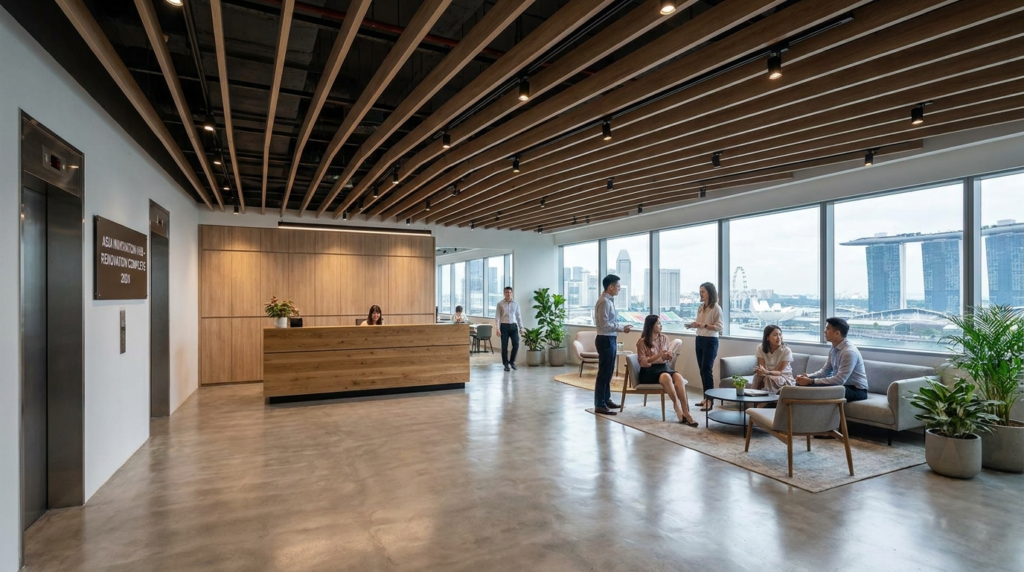
Written by: Hock Star Direct Contractor Team (20+ Years Commercial & Residential Experience) Last Updated: April 2026 Commercial Office Renovation Cost Singapore: Commercial Office Renovation Cost Singapore in Singapore — this guide covers everything you need to know for a successful outcome. Understanding commercial office renovation cost singapore helps avoid costly mistakes HDB and BCA regulations apply — always verify compliance Using a licensed contractor (Hock Star) ensures quality and accountability In 2026, office renovation costs in Singapore range from $50 to $120+ per square foot (psf), heavily dependent on the building’s MCST requirements, the extent of HVAC/electrical works, and material finishes. A standard 1,000 sqft office will typically cost between $50,000 to $80,000 for a complete, functional fit-out when using a direct contractor. The Hidden Costs of Office Renovation Key Considerations for Commercial Office Renovation Cost Singapore in Singapore Renovating an office in Singapore is drastically different from an HDB BTO. Business owners often budget for aesthetics but overlook the rigid, compliance-heavy technical requirements of commercial buildings. Working with a direct commercial contractor like Hock Star ensures your budget goes directly into quality materials and certified compliance. Critical Compliance for Commercial Spaces If you are renovating a commercial unit in areas like CBD, Paya Lebar, or Ubi, you must factor in these strict regulatory hurdles: Fire Safety & Shelter Department (FSSD): Any changes to partitions or ceilings require you to reroute fire sprinklers and emergency exit signs. This must be done by certified professionals. Night Works & Hoarding: Most commercial buildings strictly prohibit noisy hacking during the day. Night-shift labor and protective MCST hoarding will marginally increase your baseline costs. Reinstatement Liabilities: When your lease ends, your landlord will require you to “reinstate” (strip down) the office to its original bare state. Frequently Asked Questions (FAQ) How long does an office renovation take in Singapore? For a standard 1,000 to 2,000 sqft office, expect a timeline of 4 to 8 weeks. FSSD and MCST permit approvals can take an additional 2 to 4 weeks. Is it cheaper to use a direct contractor for my office? Yes. A direct contractor has their own in-house electricians, carpenters, and builders, bypassing heavy design and project management markups. Key Considerations for Commercial Office Renovation Cost Singapore in Singapore What Should Homeowners Know Before Proceeding? Singapore homeowners planning commercial office renovation cost singapore work should factor in HDB regulations, contractor licensing requirements, and realistic timelines. The HDB renovation portal outlines approved works, materials, and contractor requirements that apply to most residential projects. Working with a licensed direct contractor like Hock Star removes the interior designer markup and gives homeowners direct accountability, which can lower the overall cost compared with an ID-coordinated project. How Long Does It Typically Take? Most commercial office renovation cost singapore projects in Singapore take 4-12 weeks depending on scope, permit requirements, and material lead times. HDB projects requiring permits add 2-4 weeks for approval. Engaging a contractor early in the planning phase ensures materials are ordered and permits processed before work begins, minimising overall timeline. Practical Guidance for Singapore Homeowners What Should You Verify Before Hiring a Contractor? Before engaging any renovation contractor in Singapore, verify three things: their BCA licence number (check on the BCA contractors registry), their HDB registration status if your project involves an HDB flat, and their insurance coverage. A licensed direct contractor like Hock Star handles all compliance requirements and provides clear documentation from quote to completion. Renovation costs in Singapore vary significantly based on scope, materials, and timeline. Getting 2-3 comparable quotes helps establish a fair market rate — but the lowest quote is rarely the best value if it cuts corners on materials or licensed tradespeople. How Long Will Your Project Take? Most Singapore renovation projects take 6-12 weeks from contract signing to handover. HDB projects requiring permits add 2-4 weeks for approval. Condo projects involving MCST approval add another 2-3 weeks. Planning your temporary accommodation and storage needs in advance prevents unnecessary stress during the renovation period. Conclusion Budgeting for a commercial office renovation in Singapore requires foresight into compliance, night-works, and mechanical/electrical overhauls. By partnering with an experienced direct contractor, business owners can bypass heavy middleman fees and ensure their office opens on time and strictly up to code. Disclaimer: The information provided in this article is for general informational purposes only. Renovation costs, MCST guidelines, URA approvals, and FSSD fire safety regulations are subject to change. Always consult with a licensed commercial contractor to receive an accurate, customized quotation for your specific office unit. 🏆 Featured in SingaReviews — Best Renovation Contractors in Singapore 2026Hock Star Direct Contractor has over 20 years of experience and is rated 4.4★ from 17 Google reviews. Related Articles HDB Optional Component Scheme (OCS): Complete Guide for Singapore Homeowners (2026) Balcony Renovation Singapore: Ideas, Costs & HDB Rules (2026) Service Yard Renovation Singapore: Ideas, Costs & HDB Rules (2026)
Aluminium Gates Singapore Guide

Written by: Hock Star Direct Contractor Team (20+ Years HDB & BTO Experience) Last Updated: April 2026 Aluminium Gates Singapore: Aluminium Gates Singapore in Singapore — this guide covers everything you need to know for a successful outcome. Understanding aluminium gates singapore helps avoid costly mistakes HDB and BCA regulations apply — always verify compliance Using a licensed contractor (Hock Star) ensures quality and accountability For Singapore HDB and BTO flats, an aluminium gate typically costs between $600 to $1,200, depending on the size (3×7 ft or 4×7 ft) and customization. Unlike traditional mild steel, aluminium is 100% rust-proof, extremely lightweight, and highly compatible with modern smart digital locks, making it the top choice for modern homeowners. Why Choose Aluminium Gates Over Mild Steel? Key Considerations for Aluminium Gates Singapore in Singapore For decades, mild steel was the default standard for HDB gates. However, aluminium gates has rapidly taken over the market for three critical reasons: Zero Rust: Singapore’s high humidity causes mild steel gates to rust over time. Aluminium naturally oxidizes to form a protective layer, meaning it will never rust. Lightweight for Digital Locks: Heavy steel gates can wear out the motors on expensive smart locks. Aluminium is lightweight, putting zero strain on digital lock mechanisms (like Samsung, Yale, or Igloohome). Customizable Finishes: Aluminium can be powder-coated in matte black, textured grey, or wood-grain finishes that perfectly match your BTO’s exterior aesthetic. Popular Aluminium Gate Designs in 2026 At Hock Star Direct Contractor, we install a wide variety of aluminium gates tailored to your privacy and ventilation needs: Laser-Cut Designs: Precision-cut patterns offering a modern, geometric look. Louvered Gates: Angled slats that allow excellent airflow into your HDB living room while preventing outsiders from looking directly inside. Frequently Asked Questions (FAQ) Do I need an HDB permit to change my front gate? No, replacing your main gate does not require an HDB permit, provided the new gate does not swing outwards into the common corridor and obstruct the escape route. Can I install a digital lock on an aluminium gate? Yes. In fact, aluminium is the preferred material for digital locks because its lightweight nature prevents the lock’s latch from dropping or misaligning. Key Considerations for Aluminium Gates Singapore in Singapore What Should Homeowners Know Before Proceeding? Singapore homeowners planning aluminium gates singapore work should factor in HDB regulations, contractor licensing requirements, and realistic timelines. The HDB renovation portal outlines approved works, materials, and contractor requirements that apply to most residential projects. Working with a licensed direct contractor like Hock Star removes the interior designer markup and gives homeowners direct accountability, which can lower the overall cost compared with an ID-coordinated project. How Long Does It Typically Take? Most aluminium gates singapore projects in Singapore take 4-12 weeks depending on scope, permit requirements, and material lead times. HDB projects requiring permits add 2-4 weeks for approval. Engaging a contractor early in the planning phase ensures materials are ordered and permits processed before work begins, minimising overall timeline. Practical Guidance for Singapore Homeowners What Should You Verify Before Hiring a Contractor? Before engaging any renovation contractor in Singapore, verify three things: their BCA licence number (check on the BCA contractors registry), their HDB registration status if your project involves an HDB flat, and their insurance coverage. A licensed direct contractor like Hock Star handles all compliance requirements and provides clear documentation from quote to completion. Renovation costs in Singapore vary significantly based on scope, materials, and timeline. Getting 2-3 comparable quotes helps establish a fair market rate — but the lowest quote is rarely the best value if it cuts corners on materials or licensed tradespeople. How Long Will Your Project Take? Most Singapore renovation projects take 6-12 weeks from contract signing to handover. HDB projects requiring permits add 2-4 weeks for approval. Condo projects involving MCST approval add another 2-3 weeks. Planning your temporary accommodation and storage needs in advance prevents unnecessary stress during the renovation period. Conclusion Upgrading to an aluminium gate is a long-term investment in your home’s security, aesthetics, and convenience. By pairing a rust-proof aluminium frame with a modern digital lock, you ensure hassle-free access and a beautiful entrance to your HDB or BTO flat. Contact Hock Star Direct Contractor today for a transparent, 0% markup quotation. Disclaimer: The information provided in this article is for general informational purposes only. Prices, HDB regulations, and material specifications are subject to change over time. Always consult with a licensed professional or direct contractor for accurate, project-specific quotations and compliance before commencing any renovation works. For official HDB renovation guidelines and approved contractor requirements, visit the HDB renovation portal. Contractor licensing is governed by the Building and Construction Authority (BCA). 🏆 Featured in SingaReviews — Best Renovation Contractors in Singapore 2026Hock Star Direct Contractor has over 20 years of experience and is rated 4.4★ from 17 Google reviews. Related Articles Carpet Flooring Singapore: Types, Costs & Installation Guide (2026) HDB Optional Component Scheme (OCS): Complete Guide for Singapore Homeowners (2026) LED Strip Lights Singapore: Ambience, Types & Installation Guide (2026)
Direct Tiling Contractor in Singapore
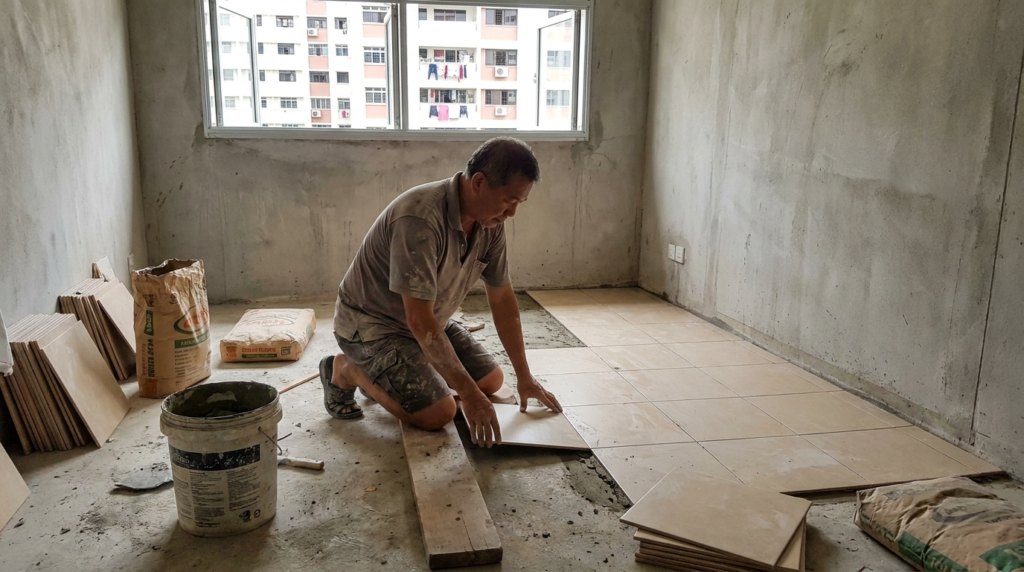
Written by: Hock Star Direct Contractor Team (20+ Years HDB & BTO Experience) Last Updated: April 2026 Tiling Contractor Singapore: Tiling Contractor Singapore in Singapore — this guide covers everything you need to know for a successful outcome. Understanding tiling contractor singapore helps avoid costly mistakes HDB and BCA regulations apply — always verify compliance Using a licensed contractor (Hock Star) ensures quality and accountability Hiring a direct tiling contractor in Singapore for your HDB or condo avoids the coordination markup that comes with going through Interior Design (ID) firms. Complete floor hacking and retiling generally costs between $8 to $15 per square foot (psf), while overlaying new tiles on top of existing ones is cheaper and faster, costing $5 to $9 psf. Why Go Direct for Tiling Works? Tiling is considered “wet works,” which is the messiest, most complex, and most expensive phase of any renovation. By hiring a direct tiling contractor like Hock Star, you are dealing directly with the master masons. This guarantees: No Middleman Markup: You pay factory and direct-labor rates. Faster Problem Solving: If a water pipe is in the way or the concrete screed is uneven, the direct contractor solves it on the spot. Strict HDB Compliance: Direct contractors handle their own HDB hacking permits and Haulage/Debris clearance directly. Hacking vs. Overlay: Which is Better? Before you select your beautiful porcelain or homogeneous tiles, you must decide whether to hack the old floor or overlay the new tiles. 1. Hacking (Demolition & Re-screeding) Best For: Resale HDBs over 10 years old, or bathrooms where waterproofing membranes have failed. Cost: High. Requires an HDB permit, heavy debris haulage, and takes 1-2 weeks. 2. Overlaying (Direct Application) Best For: New BTOs (where you don’t like the HDB-provided tiles) or well-maintained resale flats. HDB Rules: You can only overlay if the total floor thickness does not exceed 50mm, and you cannot overlay more than once. Frequently Asked Questions (FAQ) Does HDB provide free cement screed for BTO flats? Yes, if you opted out of the Optional Component Scheme (OCS) for flooring, HDB allows you to appeal for free cement screeding (up to 40mm thick) for your living room and bedrooms. How much does it cost to renovate two HDB bathrooms? For a full hack, waterproofing, and retiling of two standard HDB bathrooms, expect to pay a direct contractor between $6,000 to $9,000. Key Considerations for Tiling Contractor Singapore in Singapore What Should Homeowners Know Before Proceeding? Singapore homeowners planning tiling contractor singapore work should factor in HDB regulations, contractor licensing requirements, and realistic timelines. The HDB renovation portal outlines approved works, materials, and contractor requirements that apply to most residential projects. Working with a licensed direct contractor like Hock Star removes the interior designer markup and gives homeowners direct accountability, which can lower the overall cost compared with an ID-coordinated project. How Long Does It Typically Take? Most tiling contractor singapore projects in Singapore take 4-12 weeks depending on scope, permit requirements, and material lead times. HDB projects requiring permits add 2-4 weeks for approval. Engaging a contractor early in the planning phase ensures materials are ordered and permits processed before work begins, minimising overall timeline. Practical Guidance for Singapore Homeowners What Should You Verify Before Hiring a Contractor? Before engaging any renovation contractor in Singapore, verify three things: their BCA licence number (check on the BCA contractors registry), their HDB registration status if your project involves an HDB flat, and their insurance coverage. A licensed direct contractor like Hock Star handles all compliance requirements and provides clear documentation from quote to completion. Renovation costs in Singapore vary significantly based on scope, materials, and timeline. Getting 2-3 comparable quotes helps establish a fair market rate — but the lowest quote is rarely the best value if it cuts corners on materials or licensed tradespeople. How Long Will Your Project Take? Most Singapore renovation projects take 6-12 weeks from contract signing to handover. HDB projects requiring permits add 2-4 weeks for approval. Condo projects involving MCST approval add another 2-3 weeks. Planning your temporary accommodation and storage needs in advance prevents unnecessary stress during the renovation period. Conclusion Wet works and tiling form the permanent foundation of your home. Whether you choose to completely hack an old resale floor or efficiently overlay a new BTO, working with a direct tiling contractor ensures superior workmanship without the bloated interior design markups. You get direct communication, transparent pricing, and master-level installation. Disclaimer: The information provided in this article is for general informational purposes only. Renovation costs, material prices, and HDB/BCA guidelines are subject to change. Always consult a licensed direct contractor for an accurate, on-site assessment and formal quotation before commencing any demolition or wet works. For official HDB renovation guidelines and approved contractor requirements, visit the HDB renovation portal. Contractor licensing is governed by the Building and Construction Authority (BCA). 🏆 Featured in SingaReviews — Best Renovation Contractors in Singapore 2026Hock Star Direct Contractor has over 20 years of experience and is rated 4.4★ from 17 Google reviews. Related Articles Carpet Flooring Singapore: Types, Costs & Installation Guide (2026) Epoxy Flooring Singapore: Costs, Types & Is It Worth It for HDB & Condo? (2026) Parquet Flooring Singapore: The Complete Guide to Costs, Types & Installation (2025–2026)
HDB Hacking Guidelines & Costs Singapore (2026)
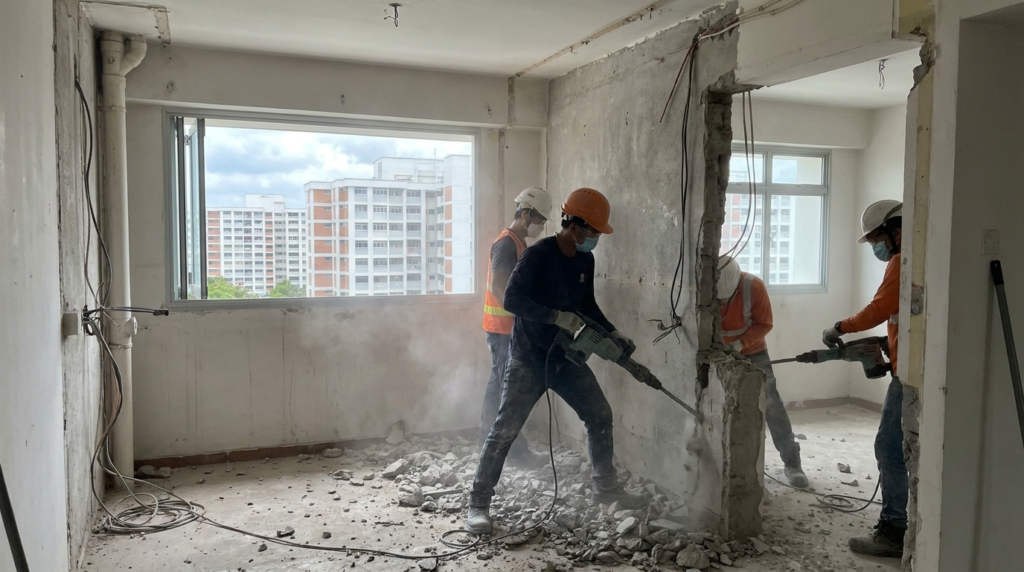
Written by: Hock Star Direct Contractor Team (20+ Years HDB & BTO Experience) Last Updated: April 2026 Hdb Hacking Guidelines Singapore: Hdb Hacking Guidelines Singapore in Singapore — this guide covers everything you need to know for a successful outcome. Understanding hdb hacking guidelines singapore helps avoid costly mistakes HDB and BCA regulations apply — always verify compliance Using a licensed contractor (Hock Star) ensures quality and accountability Wall and floor hacking in a Singapore HDB typically costs between $1,500 to $4,000 depending on the scale of demolition, haulage, and debris clearance required. All hacking works strictly require an HDB hacking permit, and hiring a direct contractor ensures safe, structural compliance without expensive middleman interior design markups. Why Hacking Requires a Direct, Licensed Contractor Hacking is the most critical and heavily regulated phase of any renovation. It involves demolishing existing floor tiles, knocking down partition walls to create open-concept spaces, or removing old built-in carpentry. Key Considerations for Hdb Hacking Guidelines Singapore in Singapore Because of the severe safety risks involved (such as accidentally damaging concealed electrical wiring or weakening the building’s structural integrity), HDB enforces strict rules. A licensed direct contractor handles the end-to-end compliance for you. HDB Hacking Rules You Must Know Structural vs. Non-Structural Walls: You are strictly prohibited from hacking load-bearing structural walls, columns, or beams. These are usually indicated by thick, solid black lines on your HDB floor plan. Only non-structural walls (thin lines) can be demolished. Professional Engineer (PE) Endorsement: If your hacking works are extensive or close to structural elements, HDB may require a PE to assess and endorse your renovation plans before granting a permit. Approved Timing: Hacking is extremely noisy. HDB restricts demolition works to weekdays between 9:00 AM and 5:00 PM. No hacking is allowed on weekends or public holidays. Average Hacking Costs Breakdown (2026) Working with a direct contractor like Hock Star eliminates hidden fees. Here is what you are actually paying for: Type of Demolition Estimated Cost Notes Floor Tiling Hacking $3.00 – $5.00 psf Includes hacking of existing ceramic/homogeneous tiles down to the concrete base. Wall Hacking (Per Wall) $400 – $800 Cost depends on the length, thickness, and material of the non-structural wall. Haulage & Debris Clearance $500 – $1,500 The cost to transport heavy rubble down from your unit and dispose of it legally at approved dumping grounds. Frequently Asked Questions (FAQ) How long does it take to get an HDB hacking permit? Once your direct contractor submits the floor plans and required documents, HDB typically processes and approves the hacking permit within 3 to 7 working days. Can I overlay tiles instead of hacking them? Yes. If you want to save money and time, overlaying vinyl or new tiles over your existing floor is a great alternative, provided the new floor thickness does not exceed HDB’s 50mm limit. Key Considerations for Hdb Hacking Guidelines Singapore in Singapore What Should Homeowners Know Before Proceeding? Singapore homeowners planning hdb hacking guidelines singapore work should factor in HDB regulations, contractor licensing requirements, and realistic timelines. The HDB renovation portal outlines approved works, materials, and contractor requirements that apply to most residential projects. Working with a licensed direct contractor like Hock Star removes the interior designer markup and gives homeowners direct accountability, which can lower the overall cost compared with an ID-coordinated project. How Long Does It Typically Take? Most hdb hacking guidelines singapore projects in Singapore take 4-12 weeks depending on scope, permit requirements, and material lead times. HDB projects requiring permits add 2-4 weeks for approval. Engaging a contractor early in the planning phase ensures materials are ordered and permits processed before work begins, minimising overall timeline. Practical Guidance for Singapore Homeowners What Should You Verify Before Hiring a Contractor? Before engaging any renovation contractor in Singapore, verify three things: their BCA licence number (check on the BCA contractors registry), their HDB registration status if your project involves an HDB flat, and their insurance coverage. A licensed direct contractor like Hock Star handles all compliance requirements and provides clear documentation from quote to completion. Renovation costs in Singapore vary significantly based on scope, materials, and timeline. Getting 2-3 comparable quotes helps establish a fair market rate — but the lowest quote is rarely the best value if it cuts corners on materials or licensed tradespeople. How Long Will Your Project Take? Most Singapore renovation projects take 6-12 weeks from contract signing to handover. HDB projects requiring permits add 2-4 weeks for approval. Condo projects involving MCST approval add another 2-3 weeks. Planning your temporary accommodation and storage needs in advance prevents unnecessary stress during the renovation period. Conclusion Hacking is the foundation of transforming an old resale flat or customizing a new BTO. By hiring a licensed direct contractor, you ensure that all demolition is done safely, legally, and cost-effectively, bypassing bloated interior design fees. Your contractor will manage the HDB permits, the PE endorsements, and the messy haulage clearance so you can focus on the design of your new home. Contact Hock Star Direct Contractor today for a transparent, 0% markup hacking and demolition quote. Disclaimer: The information provided in this article is for general informational purposes only. Renovation costs, material prices, and HDB structural guidelines are subject to change. Always consult a licensed direct contractor and refer to your specific HDB floor plan before planning any demolition or hacking works. 🏆 Featured in SingaReviews — Best Renovation Contractors in Singapore 2026Hock Star Direct Contractor has over 20 years of experience and is rated 4.4★ from 17 Google reviews. Related Articles HDB Optional Component Scheme (OCS): Complete Guide for Singapore Homeowners (2026) Balcony Renovation Singapore: Ideas, Costs & HDB Rules (2026) Service Yard Renovation Singapore: Ideas, Costs & HDB Rules (2026)
Wall Erection in Singapore HDBs
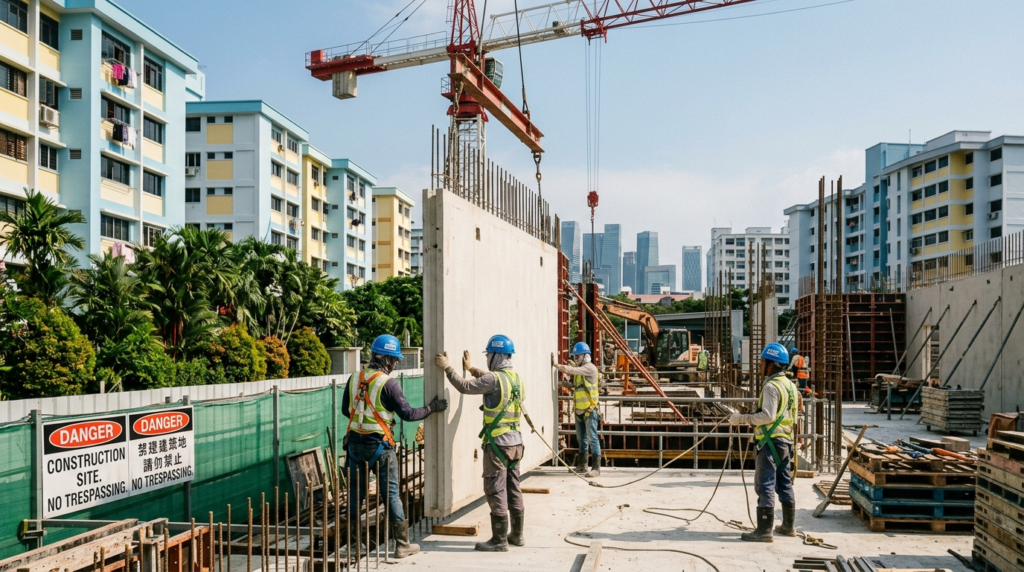
Written by: **Hock Star Direct Contractor** Team (20+ Years HDB & BTO Experience) Last Updated: April 2026 Wall Erection Singapore Hdb: Wall Erection Singapore Hdb in Singapore — this guide covers everything you need to know for a successful outcome. Understanding wall erection singapore hdb helps avoid costly mistakes HDB and BCA regulations apply — always verify compliance Using a licensed contractor (Hock Star) ensures quality and accountability The Bottom Line (BLUF) Erecting a new wall in a Singapore HDB costs between $800 to $2,500, depending on whether you use drywall partitions, hollow blocks, or glass panels. Building structural or wet area walls (like in bathrooms) requires hollow blocks and strict HDB permits, while lightweight drywall partitions offer a faster, budget-friendly alternative for bedrooms and living spaces. Types of Wall Erection in Singapore Whether you are creating a new study room, dividing a large living room, or building a walk-in wardrobe, erecting a new wall completely changes the flow of your home. However, not all walls are built the same. 1. Hollow Block Walls (Wet Areas & Heavy Loads) Hollow block walls are constructed using concrete blocks and cement mortar. They are highly durable, structurally sound, and water-resistant. Best For: Bathrooms, kitchens, and walls where you plan to mount heavy items (like large TVs or heavy cabinetry). HDB Rules: Erecting a hollow block wall requires an HDB permit because it adds significant weight (dead load) to the concrete floor slab. 2. Drywall Partitions (Gypsum Board) Drywall involves building an aluminium or timber frame and covering it with gypsum boards. It is fast to install and easy to dismantle in the future. Best For: Creating temporary rooms, dividing dry living spaces, or constructing false ceilings. Pros & Cons: Extremely cost-effective and lightweight, but not suitable for wet areas and cannot support heavy wall-mounted fixtures without internal reinforcement. 3. Glass Partition Walls (Half-Wall / Full Glass) Glass walls are incredibly popular for modern, open-concept BTOs. They allow natural light to flow between rooms while still providing physical separation. Best For: Home offices, kitchen boundaries, and modern master bedrooms. Safety: HDB requires all glass panels used in renovations to be tempered or laminated glass for safety. Wall Erection Cost Comparison (2026) When you hire a direct contractor, you avoid the coordination markup that comes with going through an Interior Designer. Wall Type Estimated Cost Characteristics Drywall Partition $4.00 – $8.00 psf Fast, cheap, lightweight. Poor soundproofing unless insulated. Hollow Block Wall $12.00 – $18.00 psf Strong, durable, water-resistant. Requires HDB permit. Tempered Glass Wall $25.00 – $45.00+ psf Premium aesthetic, allows light transfer. Most expensive. Frequently Asked Questions (FAQ) Can I build a hollow block wall anywhere in my HDB flat? No. HDB restricts the total weight you can add to the floor slab. Your direct contractor must submit the proposed wall dimensions and location to HDB (and sometimes a Professional Engineer) to ensure the building can safely support the additional load. How do I improve soundproofing on a drywall partition? Standard drywall is hollow and transmits sound easily. To improve acoustic privacy, your contractor can pack the internal frame with rockwool or fiberglass insulation before sealing the gypsum boards. Key Considerations for Wall Erection Singapore Hdb in Singapore What Should Homeowners Know Before Proceeding? Singapore homeowners planning wall erection singapore hdb work should factor in HDB regulations, contractor licensing requirements, and realistic timelines. The HDB renovation portal outlines approved works, materials, and contractor requirements that apply to most residential projects. Working with a licensed direct contractor like Hock Star removes the interior designer markup and gives homeowners direct accountability, which can lower the overall cost compared with an ID-coordinated project. How Long Does It Typically Take? Most wall erection singapore hdb projects in Singapore take 4-12 weeks depending on scope, permit requirements, and material lead times. HDB projects requiring permits add 2-4 weeks for approval. Engaging a contractor early in the planning phase ensures materials are ordered and permits processed before work begins, minimising overall timeline. Practical Guidance for Singapore Homeowners What Should You Verify Before Hiring a Contractor? Before engaging any renovation contractor in Singapore, verify three things: their BCA licence number (check on the BCA contractors registry), their HDB registration status if your project involves an HDB flat, and their insurance coverage. A licensed direct contractor like Hock Star handles all compliance requirements and provides clear documentation from quote to completion. Renovation costs in Singapore vary significantly based on scope, materials, and timeline. Getting 2-3 comparable quotes helps establish a fair market rate — but the lowest quote is rarely the best value if it cuts corners on materials or licensed tradespeople. How Long Will Your Project Take? Most Singapore renovation projects take 6-12 weeks from contract signing to handover. HDB projects requiring permits add 2-4 weeks for approval. Condo projects involving MCST approval add another 2-3 weeks. Planning your temporary accommodation and storage needs in advance prevents unnecessary stress during the renovation period. Conclusion Erecting a new wall is a powerful way to customize your HDB or condo layout to fit your lifestyle. By understanding the differences between hollow blocks, drywall, and glass partitions, you can make an informed decision that balances your budget with structural safety. Partnering with a direct contractor ensures your new walls are built strictly to HDB codes without the inflated design fees. Contact **Hock Star Direct Contractor** today for a free consultation and quote on wall erection. Disclaimer: The information provided in this article is for general informational purposes only. Renovation costs and HDB building guidelines are subject to change. Always consult with a licensed direct contractor to obtain accurate structural assessments, permits, and localized quotations before erecting any walls. 🏆 Featured in SingaReviews — Best Renovation Contractors in Singapore 2026Hock Star Direct Contractor has over 20 years of experience and is rated 4.4★ from 17 Google reviews. Related Articles HDB Optional Component Scheme (OCS): Complete Guide for Singapore Homeowners (2026) Balcony Renovation Singapore: Ideas, Costs &
Boundary Wall Singapore: Regulations & Costs Guide
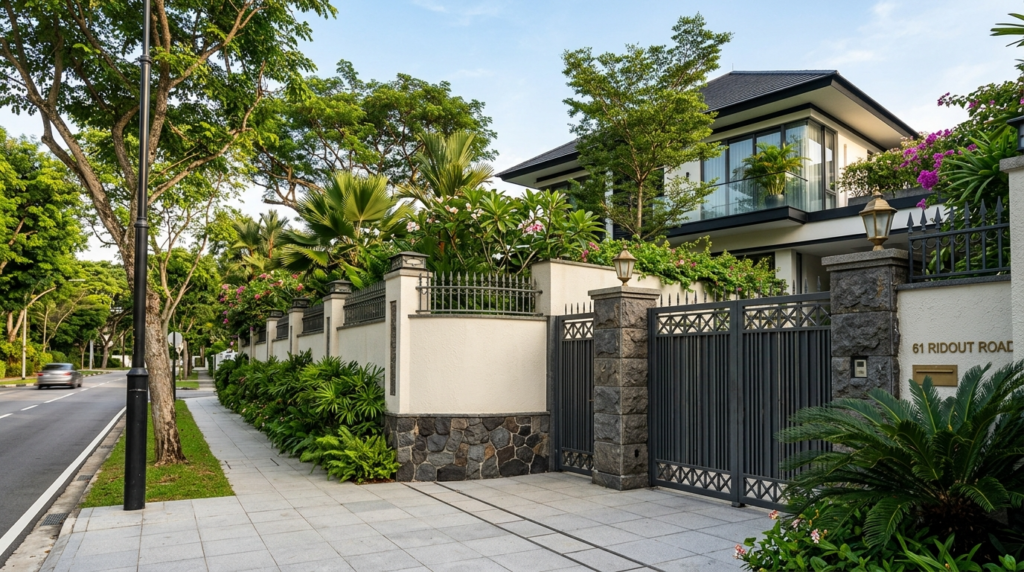
Written by: Hock Star Direct Contractor Team (20+ Years Landed & Commercial Experience) Last Updated: April 2026 Boundary Wall Singapore: Boundary Wall Singapore in Singapore — this guide covers everything you need to know for a successful outcome. Understanding boundary wall singapore helps avoid costly mistakes HDB and BCA regulations apply — always verify compliance Using a licensed contractor (Hock Star) ensures quality and accountability The Bottom Line (BLUF) Constructing or modifying a boundary wall for a landed property in Singapore costs between $150 to $300+ per foot run (pfr), depending on the height, materials, and foundation required. All boundary wall works must strictly comply with URA (Urban Redevelopment Authority) height limits and BCA (Building and Construction Authority) structural safety guidelines, requiring professional direct contractor execution. Key Considerations for Boundary Wall Singapore in Singapore Understanding Boundary Walls for Landed Properties Unlike HDB renovations, exterior works on landed properties (Terrace, Semi-Detached, or Bungalows) involve complex civil engineering and strict government oversight. A boundary wall serves as the physical dividing line between your property and your neighbor’s, or between your property and the public road. Because these walls must withstand soil pressure, heavy rain, and potential impact, they are heavily regulated. Critical URA & BCA Regulations You Must Know If you are planning to demolish, rebuild, or raise your boundary wall, your direct contractor must navigate the following legal frameworks: URA Height Limits: Front Boundary: Walls facing a public road are generally restricted to a maximum height of 1.8 meters. However, solid (opaque) walls are usually only allowed up to 1.5 meters, with the remaining 0.3 meters required to be porous (e.g., metal grilles) for visibility. Side/Rear Boundary: Walls dividing your property from a neighbor’s are typically allowed up to 1.8 meters in solid construction to ensure privacy. BCA Structural Endorsement: If your boundary wall acts as a retaining wall (holding back soil from a higher elevation), or exceeds specific height thresholds, the structural plans must be drawn and endorsed by a registered Professional Engineer (PE) and submitted to BCA for approval. The “Party Wall” Rule: A wall shared exactly on the boundary line between two semi-detached or terrace houses is considered a “Party Wall.” You cannot hack, modify, or rebuild this wall without the formal, written consent of your neighbor. Boundary Wall Construction Costs (2026) Boundary walls are priced differently than internal house walls. The cost includes deep trenching, concrete footing, steel rebar reinforcement, and exterior weatherproofing. Component Estimated Cost Notes Demolition & Haulage $2,000 – $5,000 Safe hacking of the old wall and heavy rubble removal. New Wall Construction $150 – $300+ Per Foot Run Includes reinforced concrete footing, block laying, and plastering. PE Endorsement & Permits $3,000 – $6,000+ Required for retaining walls or specific structural changes. Frequently Asked Questions (FAQ) Can I build a boundary wall higher than 1.8 meters for security? In most standard residential zones, URA strictly limits the height to 1.8m to maintain neighborhood aesthetics and ventilation. Exceptions are rare and require a formal planning appeal to URA. Who pays for repairing a shared Party Wall? Under Singapore law, the cost of repairing or maintaining a shared Party Wall is typically split 50/50 between the two adjoining property owners, unless one party caused specific damage to it. Key Considerations for Boundary Wall Singapore in Singapore What Should Homeowners Know Before Proceeding? Singapore homeowners planning boundary wall singapore work should factor in HDB regulations, contractor licensing requirements, and realistic timelines. The HDB renovation portal outlines approved works, materials, and contractor requirements that apply to most residential projects. Working with a licensed direct contractor like Hock Star removes the interior designer markup and gives homeowners direct accountability, which can lower the overall cost compared with an ID-coordinated project. How Long Does It Typically Take? Most boundary wall singapore projects in Singapore take 4-12 weeks depending on scope, permit requirements, and material lead times. HDB projects requiring permits add 2-4 weeks for approval. Engaging a contractor early in the planning phase ensures materials are ordered and permits processed before work begins, minimising overall timeline. Practical Guidance for Singapore Homeowners What Should You Verify Before Hiring a Contractor? Before engaging any renovation contractor in Singapore, verify three things: their BCA licence number (check on the BCA contractors registry), their HDB registration status if your project involves an HDB flat, and their insurance coverage. A licensed direct contractor like Hock Star handles all compliance requirements and provides clear documentation from quote to completion. Renovation costs in Singapore vary significantly based on scope, materials, and timeline. Getting 2-3 comparable quotes helps establish a fair market rate — but the lowest quote is rarely the best value if it cuts corners on materials or licensed tradespeople. How Long Will Your Project Take? Most Singapore renovation projects take 6-12 weeks from contract signing to handover. HDB projects requiring permits add 2-4 weeks for approval. Condo projects involving MCST approval add another 2-3 weeks. Planning your temporary accommodation and storage needs in advance prevents unnecessary stress during the renovation period. Conclusion Building a boundary wall is a major civil works project that requires precision, structural integrity, and flawless government compliance. A collapsing or unapproved wall can lead to severe BCA fines and neighborly disputes. By hiring an experienced direct contractor, you ensure the project is managed end-to-end—from URA submissions to the final layer of weather-resistant paint—without the massive markups of a boutique design firm. Contact Hock Star Direct Contractor today for an on-site assessment and quotation for your landed property. Disclaimer: The information provided in this article is for general informational purposes only. Construction costs, URA height regulations, and BCA structural requirements frequently change. Always consult a licensed Professional Engineer (PE) and a certified direct contractor for an accurate, localized assessment before beginning any exterior boundary works. 🏆 Featured in SingaReviews — Best Renovation Contractors in Singapore 2026Hock Star Direct Contractor has over 20 years of experience and is rated 4.4★ from 17 Google reviews.
Vinyl Flooring Singapore (2026): Types, Costs & HDB Installation Guide

Written by: Hock Star Direct Contractor Team (20+ Years HDB & BTO Experience) Last Updated: September 2026 Vinyl Flooring Singapore: Vinyl Flooring Singapore in Singapore — this guide covers everything you need to know for a successful outcome. Understanding vinyl flooring singapore helps avoid costly mistakes HDB and BCA regulations apply — always verify compliance Using a licensed contractor (Hock Star) ensures quality and accountability The Bottom Line (BLUF) If you are renovating an HDB flat or BTO in Singapore and want a waterproof, durable floor at the lowest possible cost and fastest timeline, vinyl flooring is almost always the right answer. Luxury Vinyl Tiles (LVT) cost between $3 to $15 per square foot depending on grade, install directly over existing tiles without hacking, and last 10 to 15 years in Singapore’s climate. The only decision left is which grade and which contractor. Quick Answer: Vinyl Flooring Singapore 2026 Costs Budget LVT (0.3mm wear layer): $3 – $8 psf — suitable for low-traffic areas Mid-range LVT (0.5mm wear layer): $6 – $15 psf — recommended for all living areas Premium LVT (SPC core, 0.5mm+): $12 – $25 psf — best dimensional stability in Singapore’s humidity Typical 4-room HDB (850 sqft floor area): $4,500 – $12,000 installed No hacking permit required for LVT overlay on existing tiles Prices updated September 2026. Ranges reflect direct contractor pricing; ID firm markups add 20–35%. Most homeowners spend more than they need to on flooring simply because they don’t know that the overlay option exists. Understanding the HDB rules on overlay thickness — and working with a contractor who can source at factory price — changes the maths significantly. Why Hock Star Recommends Luxury Vinyl Tiles (LVT) As direct contractors with over 500 completed HDB and condo renovations in Singapore, we recommend LVT to most homeowners before we recommend anything else. Unlike wood laminate — which warps in Singapore’s 80–85% average humidity — or ceramic tiles (which require expensive hacking and wet works), vinyl provides a seamless, premium aesthetic at a fraction of the cost and installation time. The overlay installation method means most homeowners are walking on new floors within two days of works commencing. Vinyl vs. Laminate vs. Ceramic Tiles: 2026 Comparison Feature Luxury Vinyl (LVT) Wood Laminate Ceramic Tiles Cost (PSF, 2026) $3 – $15 $3 – $8 $8 – $18+ Waterproof? Yes (100%) No — prone to warping Yes Installation 1–2 days (overlay) 1–2 days 1–2 weeks (hacking req.) HDB Overlay? ✅ Permitted ✅ Permitted ❌ Requires hacking Lifespan (SG climate) 10–15 years 5–10 years 20+ years (grout stains) Maintenance Very easy Moderate — avoid wet mop Easy, grout darkens HDB Rules for Vinyl Flooring Overlay (2026) Before beginning your renovation, you need to understand what the Housing & Development Board (HDB) permits and prohibits regarding flooring overlays. These rules apply whether you are in a BTO, resale flat, or executive apartment. Overlay thickness limit: The total thickness of any new floor finish overlaid on existing HDB tiles must not exceed 50mm. This ensures doors can still open and close smoothly and does not affect the integrity of the structural slab. Most standard LVT products run 4–8mm thick and are well within this limit. Skirting: When overlaying vinyl over existing tiles, the existing skirting typically needs to be overlaid or replaced with matching PVC skirting to cover the expansion gap and create a clean finish. Hock Star includes new PVC skirting in all vinyl flooring packages. No hacking permit required: This is the single biggest advantage of vinyl overlay. Because no demolition works are required, you do not need an HDB hacking permit, which saves both paperwork time and 5–10 days on your renovation timeline. Hacking permit applications can take 7–14 working days to process — the vinyl overlay route bypasses this entirely. Wet areas (bathrooms, kitchen): LVT can be installed in dry areas such as living rooms, bedrooms, and dining areas. For bathroom floors, ceramic tiles remain the HDB-preferred specification because of waterproofing requirements. Vinyl is not recommended for direct installation in wet areas unless it is specifically rated for wet applications. The Hock Star Direct Contractor Advantage Interior Design firms often outsource vinyl installation to a third-party flooring vendor, which adds a coordination layer to the cost. When you work with Hock Star Direct Contractor, you deal directly with the installation team. There is no ID firm in the middle, no referral fee, and no supply chain markup. You pay factory price for materials and direct labour rates — a saving that typically runs $1,500 to $3,000 on a standard 4-room HDB floor package compared to an ID firm quotation for the same specification. How to Choose the Right Vinyl Grade for Your HDB The most important specification in any LVT product is the wear layer thickness, measured in millimetres. This is the clear protective coating over the decorative layer and is what determines how long the floor will last under foot traffic. For residential use in Singapore, a 0.5mm (20 mil) wear layer is the practical minimum for all living areas. Entry points, corridors, and kitchen areas — which take the highest traffic — benefit from a 0.7mm or thicker wear layer. Stone Plastic Composite (SPC) vinyl is a newer LVT format where the core is made from a rigid limestone composite rather than the flexible vinyl used in traditional LVT. SPC boards are dimensionally stiffer, less susceptible to indentation, and more resistant to the temperature cycling caused by air-conditioning. In Singapore’s climate, SPC is generally the superior long-term specification for main living areas, with traditional flexible LVT remaining a cost-effective option for bedrooms and lower-traffic areas. SPC products typically run $1.50–$4 per sqft more expensive than equivalent flexible LVT at the same wear layer specification. What Does a 4-Room HDB Vinyl Flooring Installation Cost in 2026? A standard 4-room HDB flat has approximately 850 to 950 square feet of floor area. Excluding bathrooms (where ceramic tile is typically retained), the vinyl flooring scope covers roughly 700