

Moving back into your newly renovated home is exciting — but formaldehyde off-gassing from new cabinetry, flooring, and adhesives can make the air inside far more harmful than the street outside. In Singapore’s climate, high humidity and year-round heat accelerate off-gassing, meaning concentrations can reach problematic levels within the first weeks of handover. If you want to protect your family and clear your indoor air properly, you need a structured remediation plan — not just opening windows and hoping for the best.
Remove Formaldehyde After Renovation Singapore: Remove Formaldehyde After Renovation Singapore in Singapore — this guide covers everything you need to know for a successful outcome.
- Understanding remove formaldehyde after renovation singapore helps avoid costly mistakes
- HDB and BCA regulations apply — always verify compliance
- Using a licensed contractor (Hock Star) ensures quality and accountability
Quick Answer: How to Remove Formaldehyde After Renovation in Singapore
- Ventilate aggressively — cross-ventilate with fans for at least two to four weeks before moving in, prioritising early morning hours when outdoor air is cooler and cleaner
- Deploy activated carbon air purifiers — units with a thick activated carbon filter (not just a thin layer) bind formaldehyde molecules and remove them from circulating air
- Use indoor plants strategically — Boston ferns, peace lilies, and spider plants support air quality, but should not be your primary remediation strategy
- Avoid heat-sealing the space — running the aircon with all windows closed in a freshly renovated home recirculates off-gassed formaldehyde rather than removing it
- Test before you sleep there — professional air quality testing gives you an actual PPM reading so you know when it is safe to occupy
📊 Stat: Singapore’s National Environment Agency (NEA) recommends indoor formaldehyde levels below 0.1 mg/m³ — studies of newly renovated HDB and condo units in Southeast Asia frequently record levels two to five times that threshold in the first month post-renovation.
That gap between what is acceptable and what is common in a freshly renovated Singapore home is the reason remediation matters. The methods below are not optional extras — they are the difference between a home that is genuinely safe and one that simply smells “new.” But here is the part most renovation guides do not tell you: the materials your contractor chose during the renovation determine how much remediation you actually need afterwards.
What Formaldehyde Is and Why It Appears After Renovation
Formaldehyde is a colourless, pungent gas belonging to a class of chemicals known as volatile organic compounds (VOCs). At room temperature it exists in gaseous form, and because it is lighter than air it distributes rapidly throughout enclosed spaces. The reason it appears so reliably after renovation is not mysterious — it is baked into the materials that make up most modern interior fit-outs. Learn about HDB renovation guidelines that govern the types of materials used.
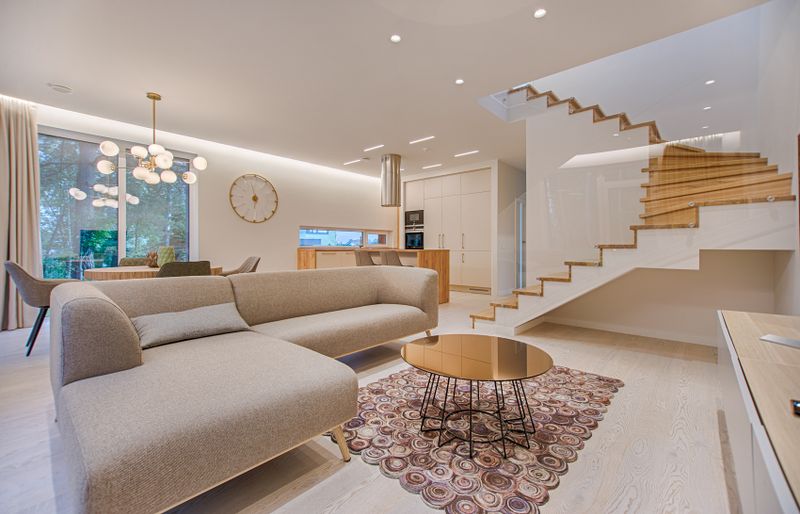
Medium-density fibreboard (MDF), particleboard, and standard plywood are bonded with urea-formaldehyde (UF) resins. These resins are cheap, strong, and widely used because they produce boards with excellent dimensional stability — but they off-gas formaldehyde as the resin slowly breaks down in the presence of heat and humidity. Laminate flooring uses similar adhesives. Paints, varnishes, and sealants introduce additional VOCs, including formaldehyde. Fabric upholstery, carpets, and even some grout and tiling products can contribute.
In a typical renovation that includes a new kitchen, bedroom wardrobes, and flooring, the combined surface area of formaldehyde-emitting materials is considerable. When you then close up that space and leave it for the snagging and handover period, formaldehyde accumulates. You come to view the finished unit and notice that sharp, throat-catching smell — that is off-gassing in its most concentrated form.
The health implications range from minor irritation — watery eyes, scratchy throat, headaches — to more serious concerns with prolonged exposure. The International Agency for Research on Cancer (IARC) classifies formaldehyde as a Group 1 carcinogen. Short-term exposure in a poorly ventilated newly renovated space does not carry the same risk as occupational exposure, but for children, the elderly, and anyone with respiratory sensitivities, reducing exposure time and concentration is a genuine clinical priority.
How Long Formaldehyde Lasts in Singapore’s Humid Climate
This is where Singapore’s tropical environment creates a specific and underappreciated problem. Formaldehyde off-gassing is driven by three factors: temperature, humidity, and the age of the material. Higher temperatures accelerate the breakdown of UF resins and push more gas out of the board. Higher humidity causes the material to absorb moisture, which also accelerates hydrolysis of the resin and increases off-gassing. Singapore runs at 26–33°C year-round with relative humidity typically between 70–90%.
What Should You Know About Remove Formaldehyde After Renovation Singapore in Singapore?
In temperate climates, formaldehyde off-gassing from new furniture and cabinetry is often described as resolving in three to six months. In Singapore’s climate, the initial off-gassing peak can be more intense — but the sustained period of elevated emissions can also extend further because the material never fully dries out. The combination of heat and humidity means Singapore homeowners should plan for elevated formaldehyde levels for the first three to twelve months, with the highest risk concentrated in the first four to eight weeks.
This does not mean you cannot move in — it means the remediation steps below are time-sensitive and should begin immediately after handover, ideally before you bring in soft furnishings and before children sleep there.
How to Remove Formaldehyde After Renovation: Step-by-Step Methods
1. Ventilation — Your First and Most Important Tool
The single most effective formaldehyde remediation strategy is sustained, directional airflow. Open windows on opposite sides of the apartment or floor to create cross-ventilation — air entering on one side and exiting on the other, rather than stagnating in a loop. Position box fans facing outward in one window set to pull air through and push it out, while windows on the opposite side draw fresh air in.
Do this for a minimum of two to four weeks before occupation, running ventilation for as many hours per day as possible. In the early morning — roughly 6 to 8 AM — outdoor air in Singapore is at its coolest and has the lowest ambient VOC load from traffic. This is your best window for pulling fresh air in.
The critical mistake most homeowners make is relying on air-conditioning instead. Standard residential aircon units recirculate indoor air — they cool it, not exchange it. Running the aircon with windows closed in a freshly renovated space actively concentrates formaldehyde rather than removing it. If the heat is unworkable during extended ventilation periods, use fans rather than sealed aircon.
2. Activated Carbon Air Purifiers — The Continuous Backstop
Once you need to reduce airflow (overnight, during rain, or after occupation), a properly specified air purifier becomes your primary tool. The keyword here is activated carbon — specifically, a thick granular activated carbon filter bed, not the thin activated carbon layer found in budget units that is primarily a marketing feature.
Activated carbon works through adsorption: formaldehyde molecules bind to the porous carbon surface and are removed from the air. The more surface area the carbon bed has, the more effective and longer-lasting the filtration. Look for units that specify the weight of their carbon filter — 3 kg or more is meaningful for a bedroom or living room. Pair this with a HEPA filter to address particulates from the renovation process simultaneously.
Position purifiers centrally in the room or near the largest source of emissions (typically a new wardrobe or kitchen cabinet). Run them continuously during the first two months of occupation, and replace carbon filters on schedule — a saturated filter stops adsorbing and may actually begin releasing trapped compounds back into the air.
3. Indoor Plants — Useful Support, Not a Solution
The 1989 NASA Clean Air Study is frequently cited as proof that indoor plants remove formaldehyde — and it is not wrong, but it is often misrepresented. The study found that certain plants did absorb formaldehyde under controlled conditions, but the rate of removal was far slower than mechanical filtration and the plant density required to make a meaningful dent in a newly renovated Singapore apartment is not realistic for residential living.
That said, plants contribute. Boston ferns, spider plants, peace lilies, and golden pothos have all demonstrated formaldehyde absorption. In a space that is already being ventilated and filtered, adding six to ten potted plants distributed across the rooms provides a useful incremental layer. They also help manage humidity, which has secondary benefits for overall air quality.
Use plants as a supporting measure, not a primary strategy. Telling yourself that the pothos on your shelf is handling the formaldehyde from three rooms of new cabinetry is not remediation — it is wishful thinking.
4. Baking Soda and Oxidising Agents — What Actually Works
Some guides recommend placing bowls of baking soda or activated bamboo charcoal around the space. Bamboo charcoal has some adsorptive properties, though far less surface area than processed activated carbon. Baking soda does very little for gaseous formaldehyde — it is primarily useful for odour absorption and does not chemically neutralise formaldehyde molecules in meaningful quantities.
Photocatalytic oxidation (PCO) is a more credible option — some professional-grade air purifiers include a UV-PCO stage that breaks down formaldehyde into water and carbon dioxide. The technology works but requires careful specification; cheap PCO units can produce ozone as a byproduct, which creates its own indoor air quality problem. If you are investing in a premium purifier for a newly renovated Singapore home, look for PCO units certified ozone-free.
What NOT to Do: Common Mistakes That Make It Worse
There are a handful of approaches that are either ineffective or actively counterproductive, and they appear in enough online guides that they are worth naming directly.
Do not burn scented candles or use aerosol air fresheners to mask the smell. Both introduce additional VOCs into the space and can increase total indoor chemical load. The smell of fresh renovation is a signal — masking it does not remove the underlying cause.
Do not seal the home and run the aircon at maximum to “dry out” the materials. This concentrates formaldehyde, raises temperature (which increases off-gassing), and keeps all emitted gas in circulation. It is the opposite of what you need.
Do not skip the waiting period if children or elderly family members are moving in. The impulse to move in immediately after handover is understandable — you have been waiting months for your renovation to finish. But the first four to eight weeks represent the highest off-gassing peak. Even two to three weeks of aggressive ventilation before occupation meaningfully reduces the concentration your family inhales during sleep.
Do not assume that the smell disappearing means the formaldehyde has gone. Olfactory adaptation — the phenomenon where your nose stops registering a persistent smell — is common. Formaldehyde concentrations can remain above safe thresholds even after you no longer notice the odour.
When to Call a Professional for Air Quality Testing
If you have completed two to four weeks of ventilation, deployed activated carbon purifiers, and are still uncertain whether the space is safe to occupy — or if vulnerable family members are moving in — professional air quality testing is the right call.
A qualified Indoor Air Quality (IAQ) testing company will use calibrated photoionisation detection (PID) equipment to measure formaldehyde concentration in parts per million or milligrams per cubic metre across different rooms and at different heights. This gives you an objective reading against NEA’s recommended thresholds (0.1 mg/m³ for formaldehyde, 0.05 ppm for some standards).
Professional testing is particularly important if you have a child under five, a family member with asthma or respiratory conditions, or if the renovation involved extensive built-in joinery — multiple wardrobes, floor-to-ceiling shelving, full kitchen cabinets — which multiplies the surface area of emitting materials.
Testing typically costs $200–$600 depending on the number of rooms and compounds tested. It is not a marketing exercise — it gives you a number, and that number tells you whether your home is ready. If it is not, a professional tester can also advise on additional remediation steps specific to your space.
How Hock Star Minimises Formaldehyde Risk Before Remediation Begins
The most effective formaldehyde remediation strategy is reducing how much you need to remediate in the first place. This is the philosophy that Hock Star has built into its material specifications, and it fundamentally changes the post-renovation picture for homeowners.
Hock Star specifies low-formaldehyde plywood as a default — not as a premium add-on. This means the core carpentry substrates in your kitchen, wardrobes, and joinery meet tighter emission standards (E0 or F4 star rated, rather than the more common E1 or E2 boards), dramatically reducing the volume of formaldehyde released into your home during the critical first months. The difference in off-gassing between E1 and E0 rated board is substantial — E0 releases formaldehyde at concentrations roughly ten times lower than standard E1 board at equivalent temperature and humidity conditions.
Beyond material selection, Hock Star incorporates proper ventilation planning during the construction phase itself — ensuring that newly installed cabinetry and joinery has been aired during the fit-out period rather than being sealed into a closed unit immediately after installation. This matters because the initial off-gassing peak from board materials occurs within the first weeks of manufacture and installation — a construction process that keeps the space ventilated reduces that peak before the homeowner even receives the keys.
Hock Star also avoids high-VOC adhesives and sealants where lower-emission alternatives are available. The cumulative effect of these material choices is that a Hock Star renovation typically requires significantly less post-handover remediation than a comparable renovation using standard market materials. Homeowners still benefit from ventilating thoroughly after handover — but the starting concentration is lower, the peak is shorter, and the window to safe occupation is reduced.
This is what proactive formaldehyde management looks like: addressing the problem at the source rather than leaving homeowners to manage the consequences with fans and air purifiers after the fact.
Conclusion: A Structured Approach Gets You to Safe Air Faster
Formaldehyde after renovation is not a reason to panic, but it is a reason to be systematic. The combination of aggressive early ventilation, properly specified activated carbon filtration, and professional air quality testing where needed gives you a clear path from freshly-renovated to genuinely safe. In Singapore’s climate, that path requires more attention than temperate-climate guides typically suggest — plan for a minimum of four weeks of active remediation before full occupation, and do not rush the process for vulnerable family members.
The smarter starting point, however, is choosing a renovation contractor who treats material selection as a health decision, not just a cost decision. Hock Star specifies low-formaldehyde plywood and low-VOC materials as standard across all projects — meaning your post-renovation air quality starts from a lower baseline and improves faster. If you are planning a renovation and want to minimise the formaldehyde burden your family walks into at handover, speak to the Hock Star team at hockstar.sg before the build begins.
For official guidance, refer to National Environment Agency.
For official guidance, refer to HDB official renovation guidelines.
For official guidance, refer to Building and Construction Authority.
Frequently Asked Questions
How long does formaldehyde last in a Singapore home after renovation, and is it worse here than in other countries?
In Singapore’s tropical climate — with year-round temperatures of 26–33°C and relative humidity of 70–90% — formaldehyde off-gassing from new cabinetry and flooring is typically more intense than in temperate climates. While the initial peak off-gassing period lasts four to eight weeks, elevated levels can persist for three to twelve months depending on the materials used and how consistently the space is ventilated. Singapore homeowners should treat the first two months as the highest-risk window and prioritise active remediation during that period.
What is the fastest way to get rid of formaldehyde smell after a renovation in Singapore without expensive equipment?
The fastest method without professional equipment is sustained cross-ventilation — opening windows on opposite sides of the unit and using box fans to push stale air out while pulling fresh air in, running this for as many hours per day as possible for two to four weeks. This will not eliminate all formaldehyde instantly, but consistent airflow is the most effective free-to-low-cost method available. Avoid relying on air-conditioning alone, as most residential units recirculate indoor air rather than exchanging it.
Are activated carbon air purifiers actually effective for removing formaldehyde from a newly renovated Singapore HDB or condo, and which type should I buy?
Yes, activated carbon air purifiers are genuinely effective for formaldehyde — but specification matters. Look for units with a substantial granular activated carbon filter bed (3 kg or more by weight), not a thin activated carbon coating layer, which has insufficient surface area for meaningful adsorption. Pair with a HEPA filter for renovation particulates. Run the unit continuously in the most emission-heavy room (typically where the most built-in joinery is located) during the first two months of occupation, and replace carbon filters on schedule.
Is it safe for my child or newborn to sleep in a newly renovated Singapore bedroom, and how long should I wait before they move in?
Children, especially infants and toddlers, are more vulnerable to formaldehyde exposure than healthy adults due to their higher respiratory rate relative to body weight and developing immune systems. The general guidance is to ventilate the bedroom thoroughly for a minimum of four weeks before a young child sleeps there, ideally longer if the room contains significant built-in cabinetry. For added confidence, commission a professional IAQ test before your child moves in — a reading below 0.1 mg/m³ (NEA’s recommended threshold) confirms the space is at an acceptable level.
Can I ask my renovation contractor in Singapore to use low-formaldehyde materials, and does it cost significantly more?
Yes — specifying low-formaldehyde or E0-rated plywood and low-VOC adhesives is entirely feasible and is a conversation worth having with your contractor before the build begins. The cost premium for E0 over standard E1 board varies but is typically modest relative to the overall renovation budget. Not all contractors offer this as a standard specification — Hock Star includes low-formaldehyde plywood as a default across its projects, which means homeowners do not need to negotiate for it or pay a separate surcharge. Starting with lower-emission materials reduces the post-renovation remediation burden significantly.
Disclaimer: This article is for general informational purposes. For clinical concerns regarding formaldehyde exposure and health, consult a qualified medical professional. For precise indoor air quality readings, engage a certified IAQ testing provider.